



How to Fold Fitted Sheets Without the Fuss
A fitted sheet can make even the most carefully arranged linen cupboard feel slightly unruly. Learning how to fold fitted sheets is less about creating a perfectly sharp square and more about finding a simple rhythm that gives the elastic edges somewhere to go. Once you know the method, it takes only a minute - and your bedding stack feels calmer for it.
Why fitted sheets are awkward to fold
Unlike a flat sheet, a fitted sheet is designed to curve around the corners of a mattress. Its elasticated edge creates depth, gathers and four corners that seem determined to face different directions. Trying to flatten it as you would a tea towel is usually where the frustration begins.
The answer is to work with those corners rather than against them. By nesting each corner into another, you turn the fitted sheet from a loose, elastic shape into one manageable panel. From there, the rest is much like folding any other piece of bedding.
This approach suits cotton, linen and blends alike. With pure flax linen, allow the fabric to fall naturally rather than pulling it taut. Linen has a relaxed texture by nature, and a soft fold is often more appropriate than a crisp, rigid finish.
How to fold fitted sheets, step by step
Begin with a clean, dry fitted sheet and enough space to move comfortably. A made bed, dining table or clear section of floor will do. If you are folding a larger sheet on your own, standing can be easier than working from a flat surface.
1. Find the two long-side corners
Hold the fitted sheet inside out, with one corner in each hand. The elastic seams should face towards you. Choose two corners along one of the longer sides of the sheet. For most fitted sheets, these are the corners furthest apart when you hold the sheet in front of you.
Slip one hand into each corner so the points sit neatly over your hands. The sheet will hang between them, with the remaining corners falling below.
2. Tuck one corner into the other
Bring your right hand across to your left hand and place the right corner over the left. Then tuck it fully around the corner in your left hand. The seams should meet and the first two corners should now sit together as one.
Take a moment to smooth the fabric around this joined corner. You do not need to chase every crease. The aim is simply to create a clean edge that will hold its shape through the next fold.
3. Gather the remaining corners
With the two nested corners still held in one hand, use your free hand to find one of the lower corners. Lift it up and tuck it over the joined pair. Repeat with the final corner.
You should now be holding all four fitted-sheet corners together. The elastic edge will form a curved pocket at the top, while the rest of the fabric hangs in a broad, uneven panel. This is the point where the sheet starts to cooperate.
4. Lay the sheet down with the elastic edge contained
Place the sheet on your chosen surface, keeping the nested corners at one end. Arrange the elasticated edge inward so it sits within the body of the sheet, rather than spreading out around the sides.
Smooth the hanging fabric into a rough rectangle. Fold any loose curved sections towards the centre, covering the elastic edge as you go. It does not need to look exact at this stage. A balanced rectangle is enough.
5. Fold into a cupboard-ready rectangle
Fold the long sides in towards the centre, then fold the sheet in half lengthways. Finally, fold it across two or three times, depending on the depth of your shelf and the size of the sheet.
For a more considered linen cupboard, keep the final shape close to the width of your pillowcase stack or duvet cover folds. Matching proportions make a shelf look intentionally arranged without requiring everything to be identical.
A simpler method for everyday folding
There are days when you want a tidy cupboard, not a folding lesson. In that case, use the same corner-nesting technique, then fold the sheet into a relaxed rectangle without spending time smoothing every edge.
This is especially useful for washed linen. The gentle texture and natural creasing of flax are part of its appeal, so an overly precise fold can feel unnecessary. Fold it while it is fresh from the line or dryer, let the fabric settle, and store it with room to breathe.
The key is consistency. If every fitted sheet is folded using the same basic sequence, they will stack neatly even when the folds are soft rather than sharp.
Folding linen fitted sheets with care
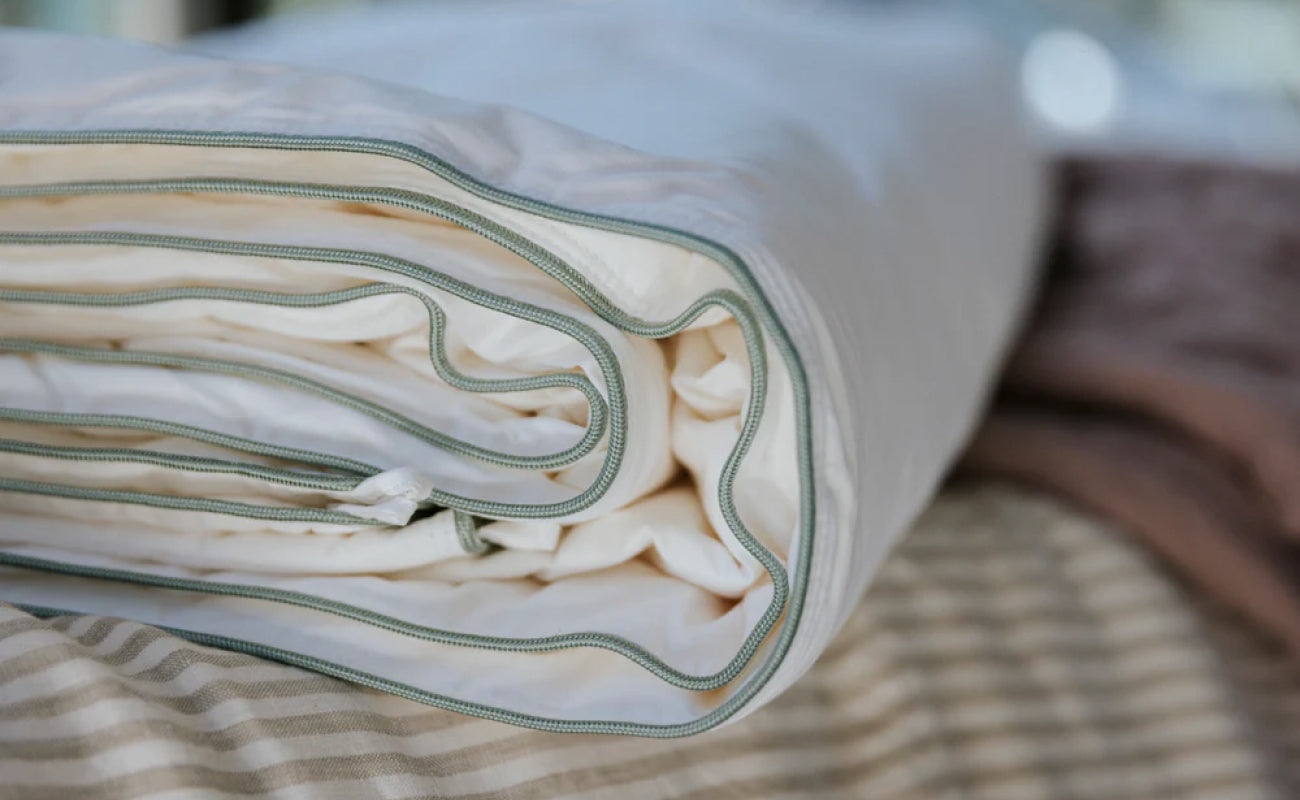
Linen becomes softer and more lived-in with every wash, but it benefits from considered care. Before folding, make sure your fitted sheet is fully dry. Storing even slightly damp linen can create unwanted mustiness and deeper creases, particularly in a tightly packed cupboard.
Avoid overfilling the shelf. Linen is breathable, but it needs a little air around it to retain its easy drape. A loosely organised stack also makes it easier to reach for one sheet without disturbing everything else.
If you prefer a smoother finish, fold linen soon after washing and drying. You can also give the sheet a light shake before beginning, which helps release twists around the elastic. Ironing is optional. Some people enjoy the polished look of pressed linen, while others prefer the quiet texture of its natural finish. Both belong in a well-made bed.
Keep each sheet set together
A fitted sheet is easiest to find when it stays with its matching flat sheet and pillowcases. Once your fitted sheet is folded, place it on top of the flat sheet and pillowcases, then use one pillowcase as a soft fabric envelope for the whole set.
Place the folded pieces inside the pillowcase and fold the open end over itself. The result is a contained bundle that keeps colours and sizes together, whether you are storing a king set, a guest-room spare or several seasonal layers.
This method is particularly helpful if your linen cupboard holds multiple neutral tones. Oatmeal, white, charcoal and soft natural shades look beautiful together, but they can be hard to distinguish when the morning is busy. Keeping full sets contained makes changing the bed feel more effortless.
Common fitted-sheet folding mistakes
The most common mistake is starting with corners that do not sit on the same side of the sheet. When that happens, the fabric twists rather than folding inward. If the sheet feels tangled after you nest the first pair, simply reset and choose two corners along the same long edge.
Another is trying to flatten the elastic before the corners are tucked together. The elastic will keep springing back because it has not been contained yet. Nest first, smooth second.
It can also be tempting to fold a sheet too tightly, especially when shelf space is limited. This may create hard creases and makes it harder to see what you own. A slightly fuller fold is often better for natural fibres and gives your cupboard a more relaxed, inviting feel.
Make the linen cupboard part of the ritual
Folding fitted sheets becomes easier when it is part of resetting the room, rather than a task saved for a growing pile of laundry. Put on a quiet playlist, fold bedding while it is still warm and fresh, and return each set to its place before moving on.
At Bedtonic, we believe the details that shape a bedroom are rarely dramatic. They are the soft, useful rituals: freshly laundered linen, a considered stack on the shelf, and a bed that is ready for the evening ahead. A fitted sheet may never be the most glamorous piece of bedding, but folded with care, it helps make the everyday feel beautifully in order.



Leave a comment
This site is protected by hCaptcha and the hCaptcha Privacy Policy and Terms of Service apply.