



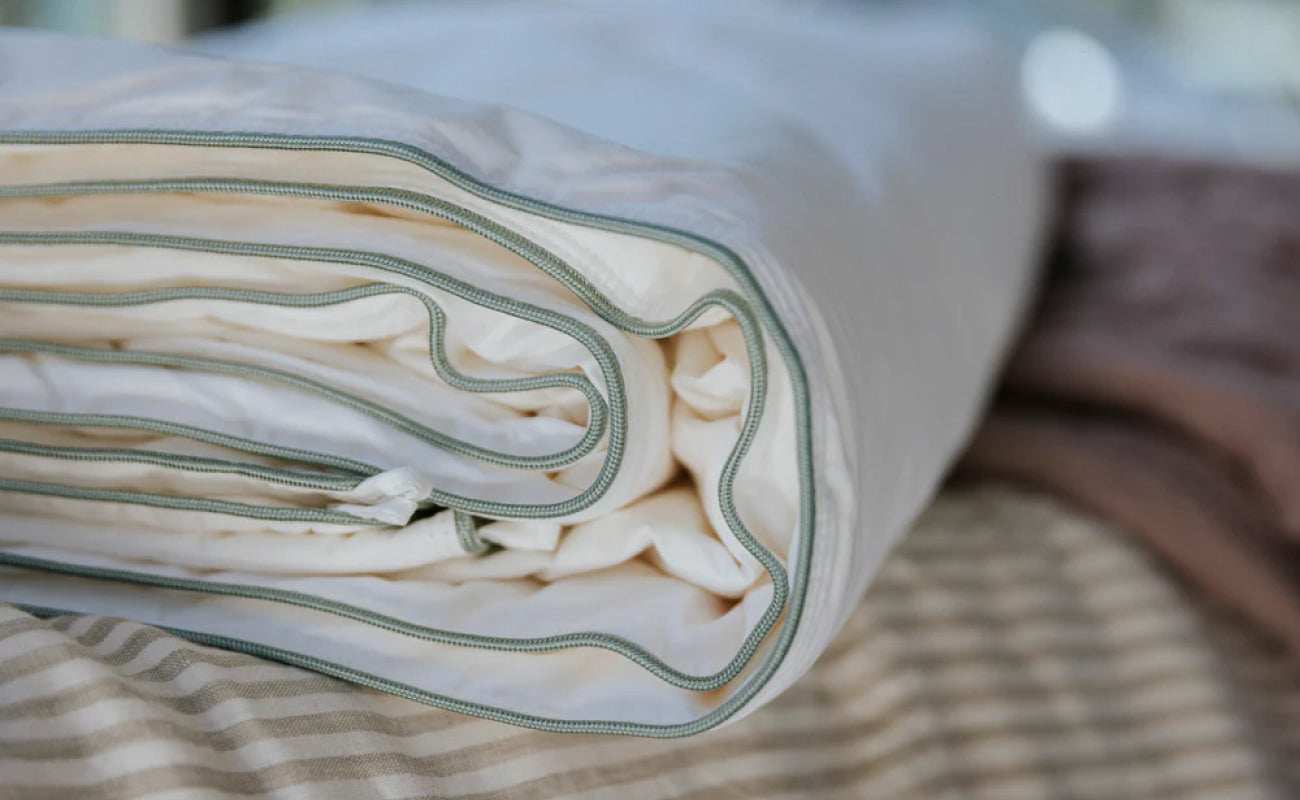
Flat Sheet or Fitted Sheet?
Some bedding choices are obvious the moment you touch the fabric. Others come down to how you like to sleep, how you make the bed, and how much structure you want around the mattress. If you have been weighing up a flat sheet or fitted sheet, the better option is less about rules and more about how you live with your bedding every day.
In a linen bedroom, that choice matters. Sheets do more than cover a mattress. They shape how the bed looks, how the layers sit, how the fabric softens over time, and how effortless the entire routine feels from first sleep to wash day.
What is the difference between a flat sheet or fitted sheet?
A fitted sheet is the base layer with elasticated corners designed to sit snugly around the mattress. It creates a neat foundation and stays in place with very little adjustment. For many people, it is the practical default - especially if you prefer a quick, clean finish when making the bed.
A flat sheet is a rectangular sheet without elastic. It can be used as a top sheet between you and your doona, or in some cases as a bottom sheet tucked tightly around the mattress. It feels a little more traditional, but also more flexible. You can fold it back neatly, layer it with intention, or use it on its own in warmer weather.
The real question is not simply which one is better. It is whether you want fitted ease, flat versatility, or a combination of both.
Why the choice feels different in linen
Linen has a character of its own. It is breathable, softly textured, and naturally relaxed in appearance. That means the decision between a flat sheet or fitted sheet is not only practical. It also affects the mood of the bed.
A fitted linen sheet gives the mattress a tailored base while still keeping that understated, lived-in finish linen does so well. It looks considered without feeling over-styled. If you like a bed that always appears calm and put together, a fitted sheet usually gets you there faster.
A flat linen sheet adds movement. As a top layer, it brings softness in a more visible way, especially when folded over a duvet or doona. It can make the bed feel more layered and slightly more luxurious, not in a formal hotel sense, but in a quiet, tactile way. The drape matters here, and linen drapes beautifully.
When a fitted sheet makes more sense
If your priority is simplicity, a fitted sheet tends to win. It holds close to the mattress, is easy to pull on, and usually needs very little attention once it is in place. For deeper mattresses, restless sleepers, and households that want bed-making to take less than two minutes, fitted is often the most natural choice.
This is also the better option if you do not enjoy re-tucking bedding. A flat sheet used on the mattress can come loose through the night unless it has been folded with care. Some people do not mind that. Others find it irritating by morning.
There is also the visual side. A fitted sheet creates a cleaner base under a quilt or doona, particularly if you prefer a more minimal bed with fewer visible layers. In that setting, the fitted sheet does the quiet work and lets the rest of the bedding speak.
For warmer sleepers, a fitted sheet paired with a doona cover can also feel less fussy. You still get the softness of linen against the skin, but without an extra layer to manage.
When a flat sheet is worth having
A flat sheet becomes especially useful when you want more control over temperature and layering. In summer, it can be enough on its own for lighter coverage. In cooler months, it sits between you and the doona, adding comfort without heaviness.
Many people also like the ease of washing a flat sheet more frequently while reducing direct wear on the blanket or doona cover above it. It is a small ritual, but one that can keep the bed feeling fresher between full bedding changes.
Then there is the look. A flat sheet folded back over the top edge of the bed introduces contrast, softness and a more styled finish. If your bedroom leans considered rather than purely functional, that detail can make a difference.
It is also helpful for those who share a bed but do not share the same sleep temperature. A flat sheet gives one more layer to adjust during the night without changing the entire setup.
Flat sheet or fitted sheet for different sleep styles
Your answer often comes down to habit.
If you move a lot in your sleep, a fitted sheet is usually the easier foundation. It stays secure and avoids the untidy bunching that can happen with a flat sheet tucked underneath.
If you like a bed that feels layered and hotel-like, a flat sheet will probably appeal. It adds that extra touch between sleeper and duvet, and some people simply prefer the sensation of a top sheet over sleeping directly under a doona cover.
If you sleep warm, you may like a fitted sheet as the essential base and use a flat sheet only seasonally. If you sleep cool, the added layer of a flat sheet can make the bed feel more insulated without needing a heavier insert.
And if you appreciate flexibility, the answer may not be one or the other. It may be both.
Should you use both?
Very often, yes. A fitted sheet on the mattress and a flat sheet on top is the most versatile arrangement. It gives you the secure fit of elasticated corners and the comfort of an extra layer above.
This combination suits linen particularly well because it lets the fabric do what it does best: regulate temperature, soften over time, and create an effortless, relaxed finish. You get a bed that feels elevated but not overly arranged.
For homes where the bedroom is part comfort, part visual retreat, using both also creates a fuller look. There is more texture, more depth, and more opportunity to play with tonal layering if you enjoy mixing colours or subtle contrast.
What matters when choosing sheets for your mattress
Not all sheet decisions are about preference alone. Mattress depth matters. So does how high your topper sits, whether your bedding is shared, and how often you want to wash and rotate your linen.
A fitted sheet needs the right depth to sit properly. Too shallow and it will pull free at the corners. Too loose and it can gather under the body. With linen, a good fit is especially satisfying because the fabric has enough structure to feel crisp while still remaining soft.
A flat sheet gives more flexibility in sizing, but it also asks for a little more effort. If you enjoy the ritual of making the bed well, that may be part of the appeal. If not, it can feel like one extra thing.
The aesthetic question: neat or relaxed?
There is no single right answer here, only the version of comfort that suits your home.
A fitted sheet leans neater. It keeps the mattress smooth and largely out of view. In a bedroom with clean lines and a restrained palette, that can feel exactly right.
A flat sheet leans softer and more expressive, especially when visible as part of the styling. Folded over a duvet or left lightly draped in warmer weather, it adds a relaxed sense of abundance.
That is one reason linen bedding works so well for both approaches. It can look tailored without feeling stiff, and undone without looking careless. Bedtonic’s approach to linen bedding sits comfortably in that balance - polished, tactile and easy to live with.
So, flat sheet or fitted sheet?
Choose a fitted sheet if you want an easy base layer, a smooth finish, and less day-to-day adjustment. Choose a flat sheet if you love adaptable layering, a slightly more styled look, or a lighter option for warm nights. Choose both if you want the most complete setup and you like the bed to feel as good as it looks.
The best sheet is the one that suits your sleep, your bedroom, and your pace of life. Good bedding should feel natural from the first night - soft, breathable and quietly beautiful. When that part is right, even a small choice like this can change the whole feel of the room.



Leave a comment
This site is protected by hCaptcha and the hCaptcha Privacy Policy and Terms of Service apply.