




Bedroom Layering Examples for a Softer Space
A well-made bed rarely relies on one perfect piece. It is the considered build-up of washed linen, gentle contrast and useful warmth that gives a room its settled feeling. These bedroom layering examples show how to create a bed that looks inviting in the morning, feels comfortable at night and adapts easily to Australian seasons.
The aim is not to make the bed look over-styled. It is to combine materials and colours with enough intention that the room feels calm, tactile and lived in. Start with the layers you use every day, then add only what earns its place.
Begin with a breathable base
The foundation of a layered bed should feel good against the skin and hold its shape through regular use. A fitted sheet, flat sheet and pillowcases in pure flax linen create an easy starting point: breathable in warm weather, insulating when the air cools, and naturally softened with washing.
Choose a base colour that suits the light in your room. White and oat bring clarity to smaller or darker bedrooms. Flax, stone and soft grey feel relaxed without reading flat. Deep olive, tobacco or charcoal create a more grounded setting, particularly in rooms with timber, aged brass or darker joinery.
There is no need for every layer to match precisely. In fact, a bed often looks more natural when the fitted sheet sits quietly beneath a slightly different flat sheet or duvet cover. Keep the undertones aligned - warm with warm, cool with cool - and the combination will still feel considered.
Bedroom layering examples by mood
Soft neutrals with texture
For a bedroom that feels light but not sparse, begin with an oat or ivory linen sheet set. Add a duvet cover in warm white, then fold a flax or biscuit-toned blanket across the lower third of the bed. Two sleeping pillows in matching pillowcases keep the base clean, while one pair of euro pillows in a slightly deeper neutral gives the bed height.
This approach works especially well when the room already has visual texture: a timber bedside table, woven rug, plaster wall or linen curtains. Rather than introducing more colour, let the small differences between ivory, cream, oat and natural flax do the work. The effect is quiet, warm and easy to return to each day.
Tonal colour for a more enveloping room
A tonal bed uses variations of one colour family rather than sharp contrast. Think muted sage sheets beneath an olive duvet cover, finished with a moss or eucalyptus blanket. Or try dusty blue with deeper slate, softened by pale grey pillowcases.
The key is contrast in depth. If every piece is the same shade, the bed can disappear into itself. Place the lightest tone closest to the mattress, then build towards richer tones in the doona cover, blanket and cushions. Linen is particularly suited to this treatment because its natural texture catches the light differently across each shade.
This is a useful choice for bedrooms that need more atmosphere without becoming dark. It also allows seasonal adjustment: retain the sheets you love and switch the top blanket or pillowcases as the weather and mood change.
White linen with a grounded accent
White bedding remains a classic for good reason. It makes the bed feel freshly made, gives coloured walls room to breathe and works with almost every style of furniture. The trade-off is that an all-white bed can feel a little formal or visually thin without another element to anchor it.
Keep the sheets and duvet cover white, then introduce one earthy note at the foot of the bed. A tobacco linen blanket, charcoal throw or deep forest-green coverlet adds shape without disturbing the simplicity. A pair of textured euro pillows in the same family can echo that colour at the head of the bed.
This is one of the most flexible bedroom layering examples for a guest room. It feels broadly appealing, yet a single accent layer can make it feel personal rather than generic.
Relaxed stripes and solids
Pattern has a place in a layered bedroom, but it is usually most successful when used once. A fine stripe in linen pillowcases or a flat sheet can bring movement to a bed made primarily from solids. Pair it with a duvet cover in a colour drawn from the stripe, then keep the blanket plain.
If the duvet cover is striped, keep the sleeping pillows simple and use texture rather than pattern elsewhere. A quilted coverlet, a softly fringed throw or a heavier linen blanket will add depth without making the bed busy. This balance is especially useful in compact rooms, where too many competing elements can make the space feel crowded.
Build the bed from function outward
Layering should make sleep better, not turn bedtime into a styling exercise. The order matters because each piece has a practical role. Sheets manage the closest layer to the body. A doona provides the main warmth. A blanket or coverlet gives flexibility, while pillows and throws finish the visual composition.
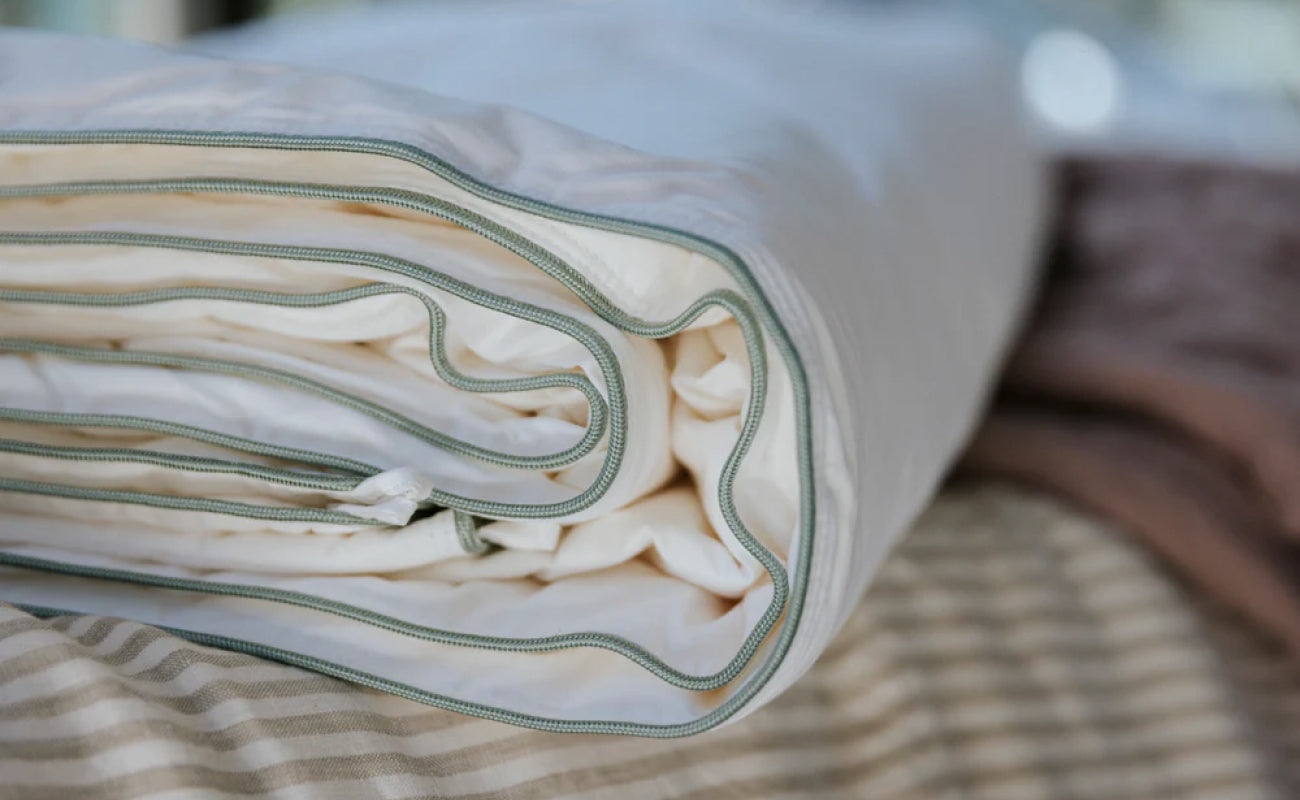
In summer, a flat sheet and lightweight linen doona cover may be enough, with a blanket folded at the end of the bed for cooler early mornings. During winter, add a warmer doona insert and place a linen blanket between the top sheet and doona, or fold it over the cover for extra warmth within reach. Linen helps regulate temperature, but the ideal number of layers still depends on your home, your sleep preferences and how much heating you use overnight.
A throw is best treated as an accent rather than essential bedding. Choose one with enough weight to drape cleanly, but not so much bulk that it feels fussy. Fold it in thirds across the foot of the bed, or let it fall loosely from one lower corner for a more relaxed finish.
Use pillows to create proportion
Pillows can quickly make a bed look either generous or overcrowded. For a queen or king bed, begin with the pillows you sleep on, then add euro pillows behind them if you want more height. One smaller decorative cushion is often enough in front. The goal is a bed you can get into without removing half its contents.
For a double bed, two sleeping pillows and one pair of euros will usually provide sufficient presence. On a single bed, a lumbar cushion or one square cushion can offer softness without taking over the mattress. If you prefer a pared-back look, skip decorative cushions altogether and let the folded blanket provide the finishing detail.
Consider pillowcase colour as part of the layering, too. Matching cases create calm symmetry. Contrasting cases, perhaps in a deeper linen shade than the duvet, can frame the bed and bring definition to an otherwise neutral scheme.
Keep colour connected to the room
The most successful layered beds borrow from the rest of the bedroom. Look at the wall colour, floorboards, artwork, curtains and even the view outside the window. A muted blue-grey bed might echo the sky beyond the room. An ochre blanket can pick up warm timber or ceramic details. This connection makes the bed feel integrated rather than placed into the room at the last moment.
You do not need a perfect colour match. A little variation keeps the space from feeling overly coordinated. Aim for two or three related hues, then introduce texture through linen, wool, timber or a woven rug. If your bedroom is already colourful, let the bed be the quieter element. If the room is mostly neutral, the bed is an easy place to bring in a restrained wash of colour.
Let linen look like linen
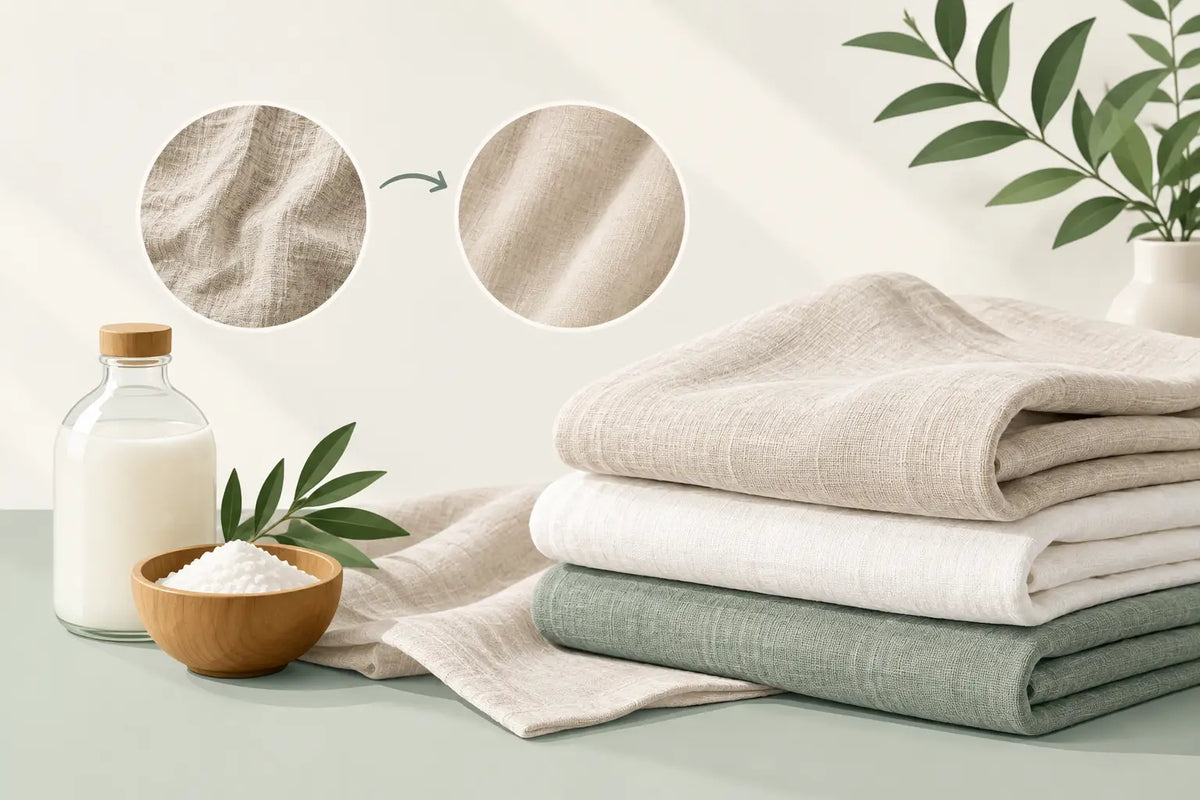
A beautifully layered bed does not need razor-sharp corners or tightly pressed folds. Pure linen has a soft, lightly rumpled character that makes a room feel more relaxed, not less polished. Smooth the surface where needed, give the duvet a gentle shake and allow the fabric to fall naturally.
Bedtonic’s approach to bedding is grounded in this kind of everyday luxury: natural fibres, softened texture and pieces designed to be used often. The best arrangement is one that still looks beautiful after a slow morning, not only for the few minutes after it has been made.
Change one layer when the season turns, bring in a colour you are drawn to, and leave enough room for comfort. A considered bed should invite rest first, and everything else follows.


Leave a comment
This site is protected by hCaptcha and the hCaptcha Privacy Policy and Terms of Service apply.