



How to Store Seasonal Bedding for Lasting Softness
The first cool night after a long Australian summer is not the moment to find a favourite quilt cover smelling faintly of storage. Knowing how to store seasonal bedding well protects the softness, colour and ease you chose it for - and makes changing the bed feel considered rather than inconvenient.
Natural fibres reward a little care. Linen, wool and silk need to be clean, completely dry and able to breathe while they rest. The aim is simple: keep each layer protected from dust, moisture, pests and harsh compression, without sealing away the tactile qualities that make a well-made bed so inviting.
Start with bedding that is truly clean and dry
Before anything goes into storage, wash it according to its care label. This matters more than it may seem. Invisible body oils, skincare residue and traces of perspiration can settle into fabric over time, becoming harder to remove and more appealing to insects than fresh textiles are.
Give every piece enough time to dry completely. In humid conditions, a fitted sheet or doona cover can feel dry on the surface while seams and folded edges still hold moisture. Store it too soon and that small amount of dampness can lead to a stale scent or mildew marks. If you line-dry outdoors, bring bedding in once it is dry rather than leaving linen in strong afternoon sun, which can gradually soften deeper colours.
For linen bedding, a gentle wash and thorough air-dry is usually all that is needed. Linen becomes softer with use and washing, so there is no need to overwork it before putting it away. Smooth it with your hands as you fold, rather than pressing every crease flat. Its relaxed texture is part of its character.
How to store seasonal bedding in the right material
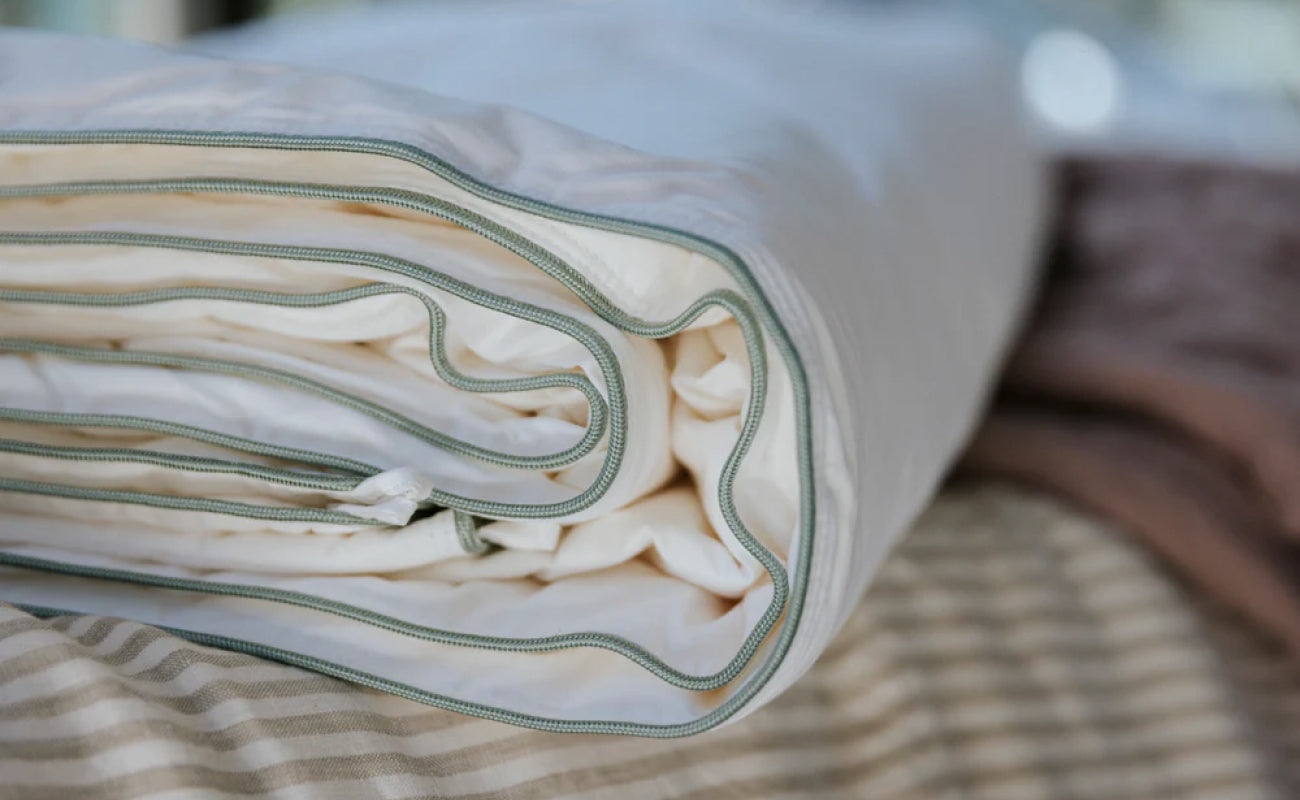
A breathable cotton storage bag, linen bag or clean fabric lidded box is an excellent home for seasonal sheets and quilt covers. These options keep dust at bay while allowing air to circulate. They are especially suitable for flax linen, which benefits from being stored in a dry, ventilated setting rather than sealed into plastic for months at a time.
Plastic tubs have their place in a damp garage or a storage-prone home, but they are best used with care. If you need their protection, make certain the bedding is bone dry and place it in a breathable fabric bag inside the tub. Open the container occasionally if it will be stored through a long season. Avoid thin plastic bags altogether. They trap moisture easily, tear readily and can leave textiles smelling enclosed.
Cardboard boxes are convenient, though less ideal for fine natural fibres over the long term. They can absorb moisture and dust, and in some homes they can attract silverfish. If a box is the only practical option, choose a clean, sturdy one and line it with unbleached cotton or acid-free tissue paper.
Choose a cool, dry place
A wardrobe shelf, linen cupboard or under-bed drawer in a climate-controlled room is generally the best location. Keep bedding away from external walls, roof spaces, garages and sheds, where temperature swings and humidity are harder to manage. In coastal areas and tropical parts of Australia, this is particularly worthwhile: moisture can build quickly during a wet spell.
Under-bed storage can work beautifully in a smaller home, provided the area is clean, dry and raised from the floor. A low fabric case with a zippered top is often better than a bulky plastic box. Vacuum beneath the bed before putting anything away, and do not store bedding directly on carpet if your room tends to feel damp in winter.
Fold for easy rotation, not maximum compression
There is a temptation to make seasonal bedding as compact as possible. For flat sheets, pillowcases and linen duvet covers, neat folding is preferable to tightly rolling or vacuum-sealing. Excessive compression creates stubborn creases and places unnecessary stress on fibres, particularly where a fabric is folded along the same line for months.
Fold larger pieces loosely into thirds, then place heavier items at the bottom and lighter pieces on top. Keep each set together by folding the fitted sheet and pillowcases inside the matching quilt cover or flat sheet. It looks calm on the shelf and removes the small frustration of searching for a single missing pillowcase when the season changes.
For a household that rotates several colours, label the storage bag discreetly with the size and contents. A simple tag such as “queen - oat linen” is enough. It preserves the order of a well-curated linen cupboard without turning it into a project.
Treat doona inserts and blankets differently
Doona inserts need room to retain their loft. Store them flat or loosely folded in a large cotton bag, rather than forcing them into a small vacuum bag. This is especially relevant for silk-filled inserts, where aggressive compression can affect the even distribution of filling. Give the insert a gentle shake before storage, and again when it comes back onto the bed.
Wool blankets should also be clean, dry and folded with care. Wool is naturally resilient, but it can be vulnerable to clothes moths in dark, undisturbed cupboards. A clean storage space is the first line of defence. Cedar blocks or lavender sachets can be useful, but keep them in a small pouch and away from direct contact with fabric. Essential oils can mark textiles, while strong fragrance can linger longer than intended.
Lightweight summer blankets can sit near the front of the cupboard for cool evenings, while heavier winter layers can move to the back during warmer months. Seasonal storage does not have to mean everything disappears. It is about giving the pieces you use less often a clean, protected place to wait.
Keep the linen cupboard fresh, simply
A calm storage routine starts with the cupboard itself. Wipe down shelves, vacuum corners and allow the space to air before returning freshly laundered bedding. Skip heavily perfumed sprays. Natural fibres hold scent well, and a subtle clean-fabric smell is more enduring than an artificial fragrance.
If your home is prone to humidity, a moisture absorber placed nearby can help, but avoid letting it touch fabric or placing it inside the storage bag. Check it regularly during the wetter months. For very valuable pieces, or bedding you will not use for more than a season, a quick inspection every few months offers reassurance. You are looking for any sign of moisture, insects or an enclosed scent, not creating another household task.
It is also worth considering what sits beside your bedding. Avoid storing it with leather goods, shoes, scented candles or cleaning products. Linen and silk can absorb odours, and sharp hardware can snag a loose weave. A dedicated shelf or fabric box maintains the sense of quiet separation that premium bedding deserves.
When it is time to remake the bed
Bring seasonal bedding out a day before you plan to use it, particularly after months in storage. Unfold it, shake out each piece and let it air in a bright room away from direct sunlight. Most fold lines will soften naturally once the bed is made and slept in. If you prefer a smoother finish, a light steam is gentler than a hard press for linen.
Check duvet covers, pillowcases and fitted-sheet elastics before they return to rotation. A small repair now can extend the life of a favourite set for years. Then make the bed slowly: the crisp first layer, the softened linen above it, the blanket within reach for a cooler early morning.
At Bedtonic, we see bedding as part of the rhythm of a home, not simply something to pack away. Store each piece with the same attention you give to making the bed, and the return of a new season will feel softer from the first night.



Leave a comment
This site is protected by hCaptcha and the hCaptcha Privacy Policy and Terms of Service apply.