


What Makes European Flax Certified?
If you are choosing linen for the way it feels, falls and softens over time, the label matters. Understanding what makes European Flax certified helps separate true material quality from broad marketing language - especially when you want bedding or clothing that feels as considered as it looks.
European Flax certification is not simply a shorthand for "made in Europe" or "good-quality linen". It refers to flax fibre that meets a defined standard around origin, traceability and farming practices. For anyone investing in linen bedding, sleepwear or home pieces, that distinction is worth knowing because the fibre itself sets the tone for everything that follows.
What makes European Flax certified linen different
At its core, European Flax certification identifies flax that is grown in Western Europe, in the coastal regions of France, Belgium and the Netherlands. These areas are known for the climate flax plant prefers - temperate conditions, steady rainfall and rich soils that support strong, fine, and long fibres.
That geographic origin is not just a small detail. Linen begins with the plant, and flax quality is shaped long before it reaches the loom. When a certification specifies where the flax is grown, it creates a level of material clarity that generic linen claims do not. You are not just buying "linen", instead you are buying a fibre with a known agricultural source.
The certification also signals that the flax has been grown without irrigation other than natural rainfall in those regions. That matters for customers who care about fibre choice as part of a more thoughtful home. Natural rainfall is one of the reasons European flax is often seen as a lower-impact option compared with more water-intensive fibres, although it is always sensible to treat sustainability claims with some nuance. A single certification does not tell the whole story of every stage of production, but it does provide a stronger starting point.
The standards behind European Flax certification
To understand what makes European Flax certified, it helps to look at the actual pillars behind the label. The certification is built around three things: traceable origin, controlled agricultural standards and fibre integrity.
Traceable origin
The flax must come from certified Western European growing areas and this traceability is one of the clearest advantages of the standard. In a market where textile supply chains can be vague and opaque, knowing where the fibre begins adds confidence.
For the customer, traceability is not just an ethical talking point - it sits closely beside quality. Premium textiles tend to be more consistent when the raw material source is tightly controlled.
Farming practices
European Flax certified fibre is associated with farming standards that exclude artificial irrigation in the designated growing regions and support responsible cultivation methods. The climate in this flax belt does much of the work naturally, which is part of why the region has such a long-standing reputation for exceptional linen.
There is a practical side to this, too. Better growing conditions tend to support finer, longer fibres, and that influences how linen feels against the skin, how it drapes and how it wears over time.
Fibre quality and purity
Certification focuses on the flax fibre itself rather than making broad promises about every finished product made from it. That is an important distinction. A beautiful linen sheet set depends on more than the raw flax alone - spinning, weaving, finishing and garment construction all matter as well.
Still, fibre quality is the foundation. Strong, well-grown flax generally leads to linen with better durability, a more refined hand feel and the kind of texture that becomes softer with use rather than tired.
What European Flax certification does and does not mean
This is where a little nuance helps. European Flax certified does not automatically mean the final item was woven, sewn and finished in Europe. It means the flax fibre itself comes from certified European sources. However, manufacturing of the final product may take place elsewhere.
That does not make the certification less valuable, but it does mean customers should read product descriptions carefully if they want the full picture. Fibre origin and manufacturing location are related, but they are not the same claim.
It also does not mean every European Flax certified product will feel identical. Linen can be washed for softness, woven for crispness or weighted differently depending on the intended use. A relaxed sheet, a structured table textile and a lightweight summer shirt can all begin with the same certified flax and still have very different finishes.
For a premium customer, this is good news rather than confusion. It means certification helps confirm the origin and quality of the raw material, while the final texture and look are shaped by design choices.
Why certified flax matters in bedding
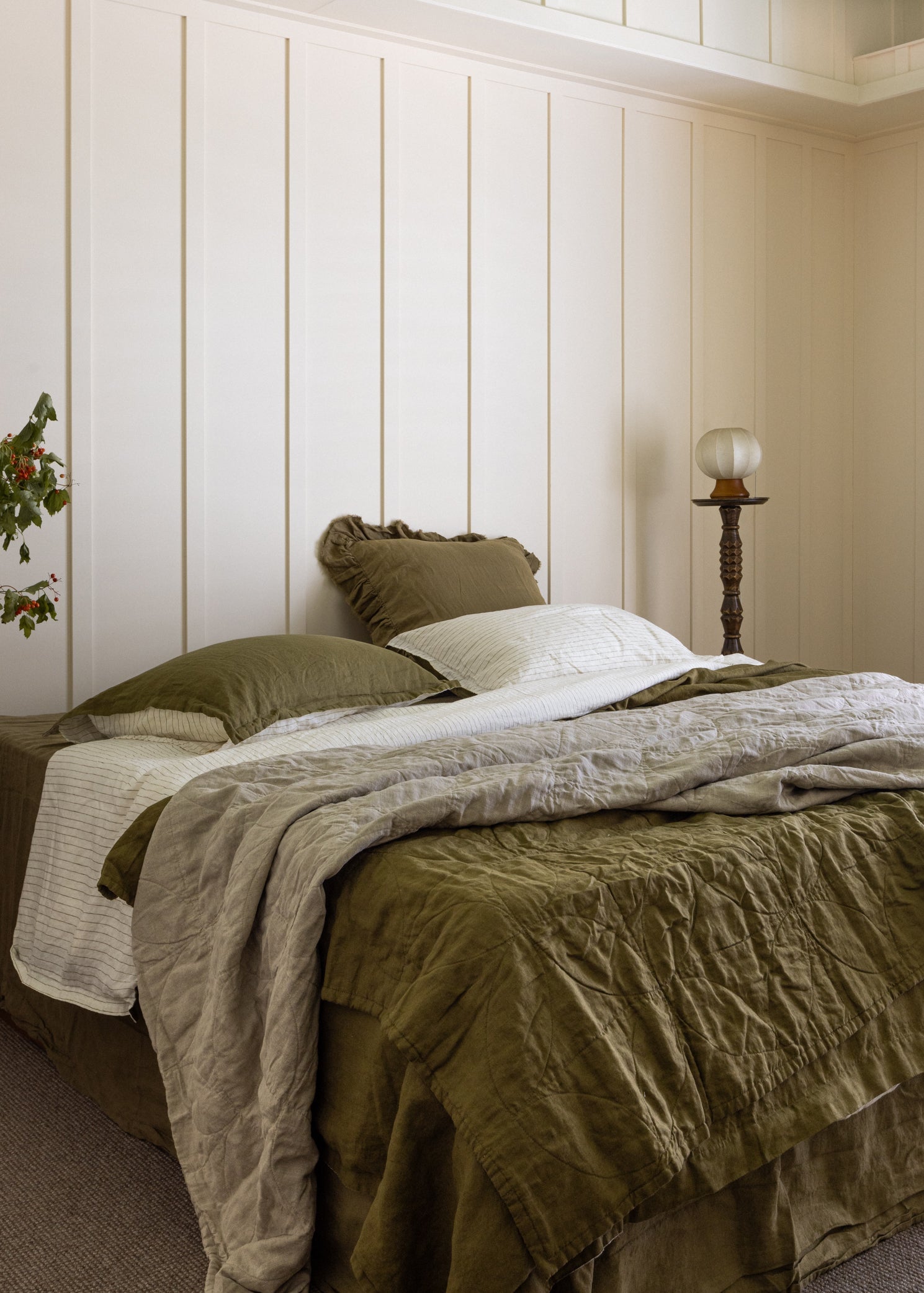
Bedding is one of the clearest places where fibre origin shows up in daily life. You notice it in the breathability of the fabric on warm nights, the dry hand feel that keeps linen from feeling clammy, and the way it settles into a softer, more relaxed finish with each wash.
When the flax is well grown and properly processed, linen tends to hold its character for years. That is part of its appeal. It is not a fabric that performs best on day one and then fades - it wears in, not out.
For households building a calmer, more elevated bedroom, certified flax adds another layer of reassurance. The visual ease of linen is only part of the story. The real luxury is in material honesty - knowing the fibre has substance behind the label.
Why fashion and home shoppers look for the label
European Flax certification resonates with customers who are no longer satisfied by surface-level claims. They want textiles that feel beautiful, but they also want to understand what they are bringing into the home and wardrobe.
That shift is especially visible in linen. As the fabric has become more popular, the market has filled with mixed-quality options. Some pieces are genuinely exceptional, while others rely on the word "linen" to suggest a premium finish they do not quite deliver.
A recognised certification helps narrow that gap. It offers a clearer benchmark for people who care about breathable natural fibres, longevity and a more considered approach to buying. In that sense, the label is not about trend - it is about trust.
What to look for beyond the certification
If you are shopping for linen bedding or apparel, certification is a strong place to start, but it should not be the only thing you consider. The best pieces pair certified flax with thoughtful finishing and design.
Look at the weight of the fabric, the softness of the finish and the overall construction. Bedding should feel substantial without heaviness. Apparel should drape easily rather than feeling coarse or stiff, and colours should feel refined and enduring, not tied to a single season.
It is also worth paying attention to how a brand speaks about its linen. Brands that focus on fibre quality, comfort and longevity usually understand the product at a deeper level than those leaning on broad luxury language. At bedtonic, European Flax certified linen sits at the centre of that approach because the material itself shapes the experience from the first touch to years of everyday use.
What makes European Flax certified worth paying for
Premium linen is rarely the cheapest option on the shelf, and that is part of the point. Better flax, clearer traceability and more careful production come at a cost.
If you are after a quick seasonal update, a lower-priced linen blend may suit. If you want bedding that becomes part of your daily ritual, certified flax linen offers something more lasting - comfort that improves with time, natural breathability and an understated finish that does not need embellishment.
That is often where value reveals itself. Not in the first impression alone, but in the fifth wash, the second summer and the way the fabric still feels right in the room.
European Flax certification will not tell you everything about a finished product, but it tells you something meaningful about where quality begins. And when you are choosing pieces designed to be lived with every day, that quiet kind of confidence is the detail that matters most.

Leave a comment
This site is protected by hCaptcha and the hCaptcha Privacy Policy and Terms of Service apply.