



European Linen Quality Guide
Some linen looks perfect on a screen, then arrives feeling flat, scratchy or oddly stiff. That gap usually comes down to quality. A good European linen quality guide helps you look past styling and price, and focus on what actually shapes the feel, drape and longevity of the fabric you live with every day.
For bedding in particular, linen quality is a combination of fibre origin, yarn quality, weaving, finishing and how honestly a product is described. Two sets can both be called linen, yet feel entirely different after a week of sleep. If you are choosing for comfort as much as appearance, the details matter.
What makes European linen different
European linen begins with the flax plant, and the growing conditions play a quiet but significant role in the final fabric. Flax that is grown across parts of Western Europe benefits from a temperate climate, steady rainfall and generations of cultivation expertise. This produces strong, fine fibres that are well suited to premium bedding and apparel.
That does not mean every fabric made from European flax is automatically exceptional. Origin is a strong starting point, but not a guarantee. What matters is how the fibre is processed after harvest, how the yarn is spun, and whether the fabric is finished in a way that preserves linen's natural character rather than masking weaknesses.
Certification can be helpful here. European Flax® Certified, for example, signals traceable flax grown in Europe and sets a clearer standard around sourcing. While this is not the only mark of quality, it does offer reassurance for shoppers who care about material credibility rather than broad marketing claims.
A European linen quality guide starts with the fibre and yarn
The first thing to understand is that better linen usually begins with better fibre length and consistency. Long, well-processed flax fibres create smoother, stronger yarns that are less likely to pill, less likely to weaken early, and more likely to soften beautifully over time.
Shorter or more irregular fibres can still produce linen, but the result may feel hairy, rough or unstable. Sometimes that texture is presented as rustic charm. Occasionally, it is exactly that, but it can simply lead to lower-grade fibre that will not perform as well under daily use.
Yarn quality affects more than fabric feel. It also influences how the fabric falls on a bed, how neatly it launders, and how much movement or creasing it shows. Linen will always have a relaxed finish, which is part of its appeal - but high-quality linen tends to crease with softness and fluidity rather than looking crumpled and coarse.
Weight matters, but heavier is not always better
One of the easiest ways to compare linen is by fabric weight, usually measured in GSM, or grams per square metre. This figure tells you how substantial the cloth is, but not whether it is well made.
A midweight linen is often the sweet spot for bedding. It feels breathable and relaxed, yet still substantial enough to drape well and hold up to frequent washing. Very lightweight linen can feel airy and elegant, particularly in warm weather, but it may not offer the same durability for sheets used year-round. On contrast, heavyweight linen can feel luxurious at first touch, though it may also feel denser, warmer and slower to soften.
So the right weight depends on how you live. If you sleep hot or style your bed with a lighter hand, a more refined mid-weight may suit you better than an overly dense weave. If you want more structure or a slightly cocooning feel, a heavier linen can make sense. Weight is a preference point, not a shortcut to quality.
The weave and finish tell you more than marketing ever will
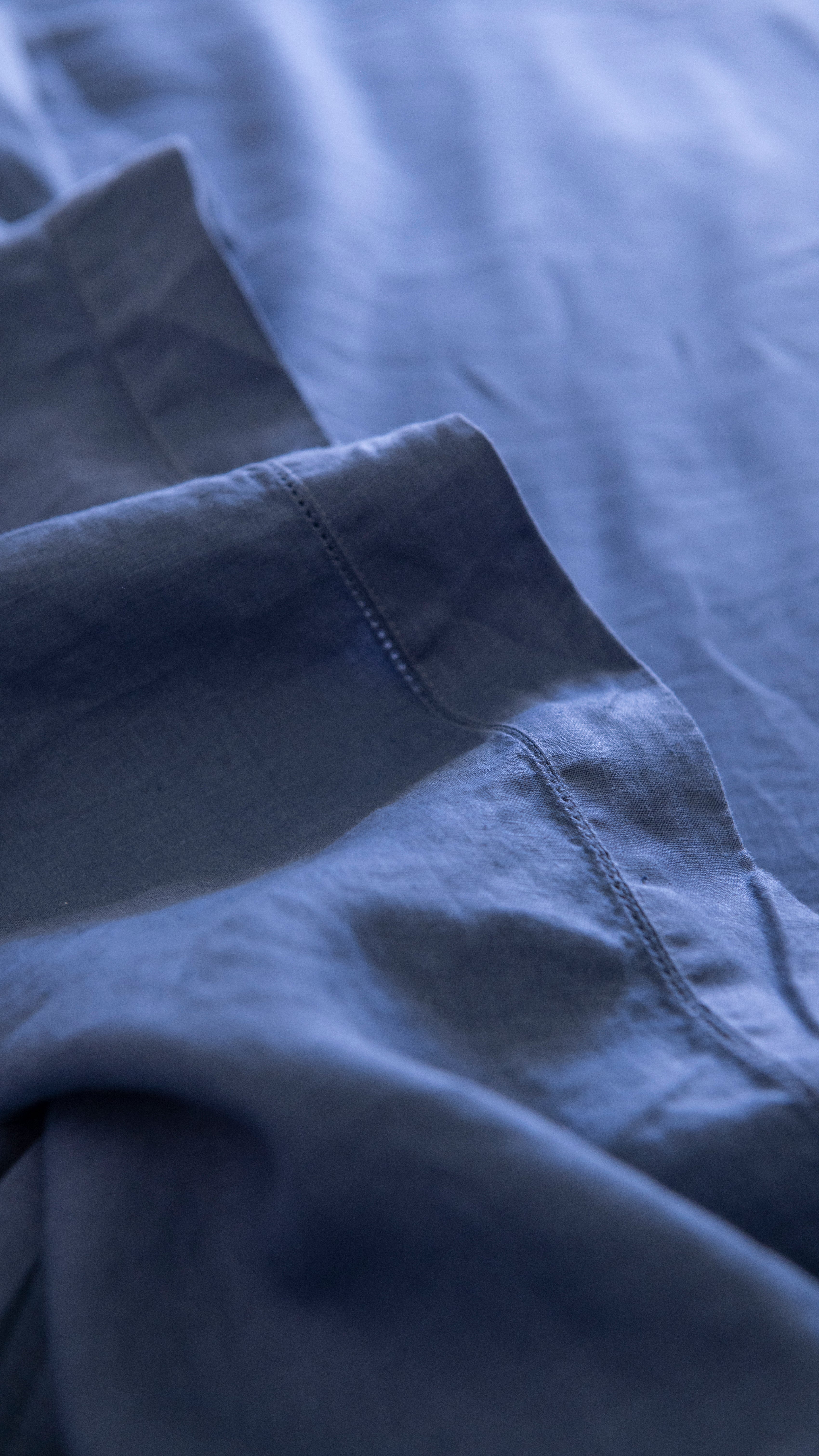
When reading product descriptions, the finish is often where quality reveals itself. Stonewashed linen is a common premium finish because it softens the fabric and gives it that easy, lived-in hand from the beginning. Done well, it creates comfort without compromising durability.
There is a difference, though, between linen that is naturally softened through careful finishing and linen that has been aggressively processed to disguise inferior yarn. The first improves the fabric, whereas the later can leave it feeling pleasant for a moment but only to break down faster with use.
A balanced weave is just as important and good quality linen should feel breathable and textural, but not loose to the point of fragility. If the weave is uneven, overly open or inconsistent across the surface, that can point to lower manufacturing standards. In bedding, this tends to show up quickly around seams, corners and high-friction areas.
How quality linen should feel at home
Premium linen does not always feel silky on day one, and that is worth saying plainly. Pure flax linen has a distinct hand - cool, dry and lightly textured feel rather than glossy or slippery. Softness comes with use, and the best linen becomes more inviting with every wash.
What you are looking for at the start is balance - the fabric should feel supple, not brittle. Textured, not harsh, substantial, and not heavy-handed. If it feels papery, excessively coarse or oddly limp straight out of the packet, that is usually a sign to look more closely.
This is where expectations matter. Some shoppers move from sateen cotton to linen and expect the same finish. Linen is different by design. Its comfort is quieter - it breathes well, regulates temperature naturally and brings a relaxed elegance that feels better lived in than perfectly pressed.
Signs of quality in construction
Even the best fabric can be let down by poor construction. For bedding, pay attention to stitching, seam consistency and finishing details. Neat seams, secure closures and a clean cut all suggest greater care in production.
In duvet covers and pillowcases, the small things often tell the truth. Buttons should feel secure. Internal ties should be firmly attached. Edges should sit flat without twisting. These details may seem minor on the product page, but they shape how the piece will perform over time.
Sizing also matters. Well-made linen bedding should account for natural fibre behaviour, including a little movement after washing. If dimensions are meanly cut, a fitted sheet can become frustrating very quickly, and a duvet cover may lose its easy drape.
What to watch for when comparing linen online
A refined product image can only tell you so much. When shopping online, look for specifics rather than generic luxury language. Clear information about fibre origin, certification, composition and finish is usually a better sign than vague references to premium quality.
If a brand is confident in its material, it tends to say exactly what the fabric is. One hundred per cent flax linen is not the same as a linen blend, and blends are not automatically poor, they simply behave differently. If you want the breathable, textured character that people seek out in linen bedding, then purity matters.
Customer reviews can also be useful, especially when they mention how the linen changes after several washes. The best feedback often talks about softness improving, sleep comfort increasing and the fabric holding its shape. Complaints about thinning, weak seams or roughness that never settles are harder to ignore.
European linen quality guide for long-term value
Price and value are not identical. Premium linen usually costs more because better flax quality, better weaving and better finishing cost more. But there is still a range within the category, and not every expensive set earns its place.
A higher upfront price can make sense when the fabric softens beautifully, wears well and stays relevant in both feel and design for years. Linen's appeal is partly practical and partly aesthetic. It performs across seasons, layers effortlessly and never feels overworked in the bedroom.
That said, the most expensive option is not always the smartest one. If you prefer a lighter handle, a relaxed finish or a slightly more understated weight, your best choice may sit somewhere in the middle of the premium market. Quality is about alignment between material, finish and your daily habits.
For anyone building a calmer, more tactile home, this is where considered linen earns its place and bedtonic centres that idea well - not through excess, but through fabric that feels elevated in use.
Care is part of quality
Even exceptional linen needs the right care to reach its full softness. Wash it gently, avoid overcrowding the machine, and skip overly harsh detergents. Linen responds well to regular use, and a thoughtful wash routine helps the fibres relax rather than wear out.
There is also a trade-off between a perfectly crisp look and a more natural finish. If you line dry and embrace a little creasing, the fabric keeps its relaxed character. If you prefer a smoother look, a light iron while still slightly damp can refine it without stripping away that softness.
The pleasure of good linen is that it asks less of you over time - it becomes easier, softer and more familiar. That is the real measure of quality. Not how it performs for one styled moment, but how it feels on an ordinary night, week after week.
When choosing linen, trust the fabric story more than the sales language. The right set will not just look refined at first glance. It will settle into your home with ease, and keep getting better the more you live in it.

Leave a comment
This site is protected by hCaptcha and the hCaptcha Privacy Policy and Terms of Service apply.