



Linen Versus Sateen Sheets: Which Feels Right?
The difference is often felt before it is seen. In the choice between linen versus sateen sheets, linen has a dry, airy texture with relaxed character, while sateen feels smooth, silky and softly luminous. Both can make a bed feel considered, but they create distinctly different sleep environments.
For a room that favours natural texture, ease and softness that develops over time, linen is hard to look past. If you love the polished drape and glossy finish of hotel-style cotton, sateen may be the better fit. The right choice comes down to how you sleep, what your home feels like, and what you want from the fabric after the first few washes.
Linen versus sateen sheets: the essential difference
Linen is made from the fibres of the flax plant. It has a naturally textured weave, a matte finish and visible variation that gives each bed a more relaxed, lived-in appearance. Quality flax linen feels light without feeling slight, and its texture becomes increasingly supple through use and washing.
Sateen is not a fibre but a weave, most commonly made from cotton. Its threads are woven so more of the yarn sits on the surface, creating a smooth hand-feel and gentle sheen. The result is a fabric that looks more formal and feels closer to silk than crisp percale cotton.
Neither is objectively better. Linen brings tactile depth and natural irregularity; sateen offers sleekness and a more uniform finish. Consider whether you are drawn to an effortlessly rumpled bed or one that looks smooth and tailored when freshly made.
How each fabric feels against the skin
Linen has a distinctive feel from the outset: cool, dry and lightly textured. Some people adore that crisp, breathable sensation immediately. Others need a little time to appreciate it, particularly if they are used to very smooth cotton. Good linen should not feel scratchy or coarse, and it softens beautifully with every wash while retaining its character.
Sateen feels smooth and fluid from the first night. The surface is soft against the skin, with less texture and a little more weight than linen. For sleepers who prefer a buttery, enveloping bed, sateen can feel particularly appealing in cooler months.
There is also a visual element to comfort. Linen’s natural creases catch the light softly and make a bed feel inviting, even when it has not been pressed to perfection. Sateen’s subtle shine suits a cleaner, more refined bedroom look. One is not more luxurious than the other - they simply express luxury differently.
For warm sleepers and Australian summers
Linen is known for its ability to breathe. Flax fibres allow air to move freely, helping the body release warmth and moisture through the night. This makes linen an excellent choice for warm sleepers, humid evenings and Australian summers when a heavy, heat-trapping bed is the last thing you need.
It also adapts well across the seasons. Linen can feel cool when the weather is warm, yet its fibres provide gentle insulation when the temperature drops. Paired with a quality doona insert or layered blanket, it is an easy fabric to live with year-round.
Sateen is generally warmer because of its denser weave and smooth surface. That can be a comfort for those who run cold, sleep in a cooler home or prefer a cosier, more enveloping feel. In a warm bedroom, however, some sleepers may find sateen less airy than linen.
Appearance, drape and bedroom style
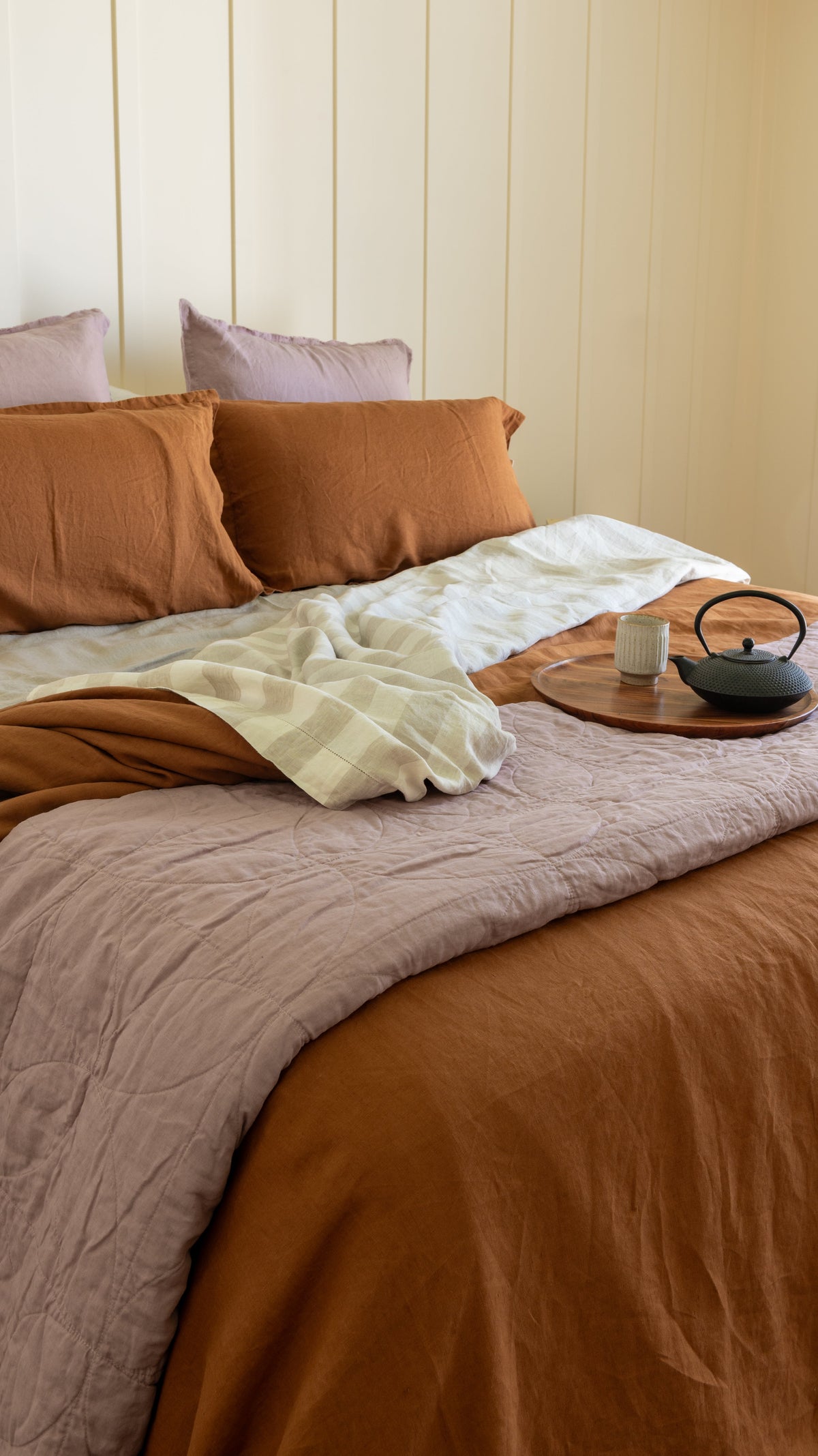
Linen is for those who appreciate a bed with movement and texture. It drapes softly rather than sharply, and its natural creasing is part of the appeal, not something to correct. Neutral flax tones, washed whites, muted stripes and earthy colours all sit beautifully in a linen bedroom, where the overall feeling is calm rather than overly styled.
Sateen has a smoother, more tailored presence. Its sheen can make colour appear richer, and it tends to suit spaces with a more classic or glamorous finish. If you like a tightly tucked bed, crisp symmetry and a satin-like surface, sateen offers that sense of polish.
For many homes, linen is also easier to layer. Its matte texture works naturally alongside wool, cotton quilts, silk doona inserts and woven throws without competing for attention. The bed gains depth without looking busy.
Care and the reality of everyday use
Both fabrics benefit from thoughtful care, but linen is especially forgiving of a life well lived. Wash it in cool or lukewarm water with a gentle detergent, avoid bleach, and dry on a low setting or line dry where possible. Linen does not need ironing unless you enjoy the ritual. Its softened creases are central to its relaxed appeal.
Sateen also needs gentle washing to preserve its smooth finish. Over time, the longer surface threads that create its sheen can be more prone to pilling or snagging than linen, particularly with frequent washing or rough laundering. Avoid high heat and take care with zips, jewellery and pets’ claws.
Linen is exceptionally durable when it is well made. Flax fibres are strong, and the fabric is designed to improve rather than wear out quickly. It is an investment fabric: the first wash is only the beginning of its softness. Sateen can remain beautifully smooth for years, though its lustre may gradually soften with use.
What about wrinkles?
If a perfectly pressed bed is non-negotiable, linen may test your patience. It wrinkles because flax fibres have little elasticity, and those creases are visible. Yet this is precisely what gives linen its ease: it looks beautiful without asking for perfection.
A simple approach works well. Smooth the fitted sheet while making the bed, give the duvet a light shake, and let the fabric fall as it will. The result feels considered, never precious. Sateen is the more natural choice if you prefer a flatter, smoother finish with minimal visible creasing.
Price, fibre quality and what to look for
The label matters more than the label’s marketing language. Sateen can be made from various cotton qualities, while linen can vary widely depending on the flax, weave, finishing and construction. A low price may reflect lighter fabric, shorter fibres or less careful finishing, none of which is ideal for bedding used every night.
When choosing linen, look for 100% flax linen, transparent material credentials and a weight that feels substantial yet breathable. European Flax® Certified linen offers useful reassurance around the origin and quality of the fibre. At Bedtonic, this material focus is central: pure European flax linen is chosen for the softness, strength and easy beauty it brings to daily rituals.
With sateen, look for long-staple cotton and a sensible thread count rather than the highest number on the tag. Very high thread counts can sometimes indicate multi-ply yarns or a tighter finish that reduces breathability. The best fabric is the one that feels right in your hands and suits how you sleep.
Which sheets should you choose?
Choose linen if you sleep warm, value breathable natural fibres, like a relaxed aesthetic or want bedding that becomes softer and more personal over time. It is particularly suited to homes where the bedroom is a quiet retreat rather than a showroom.
Choose sateen if you prefer a smooth, silky surface, tend to feel cold at night or want a more polished and lustrous finish. It is a lovely option for those who enjoy the feeling of sliding into a soft, cocooning bed.
There is room for both in a considered linen cupboard. Sateen can be appealing for the deepest part of winter or for guests who favour a sleek cotton finish. Linen earns its place through versatility: cool on hot nights, comforting in winter layers, and quietly beautiful every day.
Let your sheets support the way you want to wake up. Whether that means cool, rumpled flax beneath morning light or smooth sateen tucked neatly at the corners, the most enduring choice is the one you will look forward to slipping into each night.

Leave a comment
This site is protected by hCaptcha and the hCaptcha Privacy Policy and Terms of Service apply.