






How to Build a Sleep Sanctuary at Home
A beautiful bedroom can still somehow feel restless. The lamp might be too harsh, the sheets might trap heat, or the room just carries visual noise, and by bedtime your mind is still catching up. If you are wondering how to build a sleep sanctuary, the answer is less about chasing a perfect look and more about creating a room that feels calm in every layer.
A true sleep sanctuary supports rest before your head even touches the pillow. It softens the senses, regulates temperature, and removes small frictions that interrupt the evening. The most effective rooms do this with restraint - natural fibres, considered lighting, a calm palette, and only pieces that earn their place.
How to build a sleep sanctuary from the bed out
Your bed should set the tone for the entire room. If it feels inviting, breathable and settled, the rest of the space will follow.
Here, natural fibres matter. Linen has a particular ease that suits Australian homes well, especially if nights run warm or the seasons shift sharply. It breathes, absorbs moisture well, and develops softness over time rather than wearing out. That lived-in texture also changes the look of the room. A bed dressed in flax linen appears relaxed and refined at once, which is exactly the balance most sleep spaces need.
Not every sleeper wants the same finish, however. Some prefer a crisp, hotel-style bed, while others want something softer and less structured. A sleep sanctuary should reflect how you actually rest. If you move often in your sleep, lighter layers may feel better than a heavy stack of bedding. If you run cold, you may want depth and warmth, but still in breathable materials rather than synthetics that hold heat too aggressively.
The insert matters as much as the cover. A quality doona with good airflow helps maintain a more even sleep temperature across the night. Add pillow choices that support your sleeping position, not just the styling of the bed. Beautiful bedding should never come at the cost of comfort.
Choose layers that feel calm, not crowded
The most restorative beds are layered with intention. That usually means fitted sheet, flat sheet if you enjoy one, doona cover, pillowcases, and a blanket or throw if the season calls for it. Beyond that, it is easy to cross into clutter.
Too many cushions, decorative pieces or contrasting textures can make the bed feel performative rather than restful. There is a difference between styled and overworked. In a sleep sanctuary, every layer should either improve comfort or contribute to calm.
Colour plays a quiet but powerful role. Softer neutrals, washed earth tones and muted shades tend to settle the room without making it feel flat. Think oat, stone, clay, olive, sand or a softened white rather than stark bright tones. Dark colours can also work beautifully, though they tend to feel more cocooning and dramatic. It depends on the mood you want the room to hold at night and in the first hour of morning light.
Light changes everything
Many bedrooms are lit for function and not rest. A single bright ceiling light may be practical when folding washing or changing sheets, but it rarely supports the shift into evening.
To build a better atmosphere, think in layers of light. Bedside lamps with warm bulbs create a softer pool of light for reading and winding down. Wall lights can work just as well if space is limited. Candles can also add a gentle sense of ritual, when used with intention and care.
The strongest light in the bedroom should be optional, not constant. If you can, separate overhead lighting from the softer bedside glow so you are not moving from full brightness straight into darkness. That transition should be gentle and easeful, not abrupt.
Morning light deserves equal attention. If your room gets strong early sun, window coverings can help regulate brightness and temperature. Blackout options suit some sleepers, while others feel better waking with natural light. Again, it depends on the individual. A sleep sanctuary is not built by specific rules that suit everyone. It is shaped by what makes your own rhythm easier.
Keep the senses clear
Sleep is sensory, so the room should not work against the body. Temperature, scent, texture and sound all influence whether a bedroom feels restorative or unsettled.
Airflow is a good place to start. Bedrooms often feel stuffy without anyone quite noticing until summer arrives. Breathable bedding helps, but so does opening the room during the day, keeping dust low, and avoiding synthetic fabrics that trap warmth. If you use a rug, curtain or upholstered bedhead, choose materials that feel natural and easy to maintain.
Scent can be lovely, but less is usually more. A light, clean fragrance can signal the start of the evening, especially if it becomes part of a regular routine. Incense, soap, a linen spray or a candle can all work, but avoid layering too many fragrances at once. A bedroom should smell fresh and faintly familiar, not styled to the point of distraction.
Sound is often overlooked. If outside noise is constant, soft furnishings can help absorb some of it. A thicker curtain, a rug, and linen bedding all contribute to a quieter feeling, even if they cannot silence the street entirely.
Reduce visual noise
A sleep sanctuary is rarely about adding more. More often, it is about editing well.
Bedrooms tend to collect unfinished decisions - a chair covered in clothes, cables by the bed, paperwork from another room, beauty products spread across a dresser. None of these are dramatic on their own, but together they keep the room mentally active.
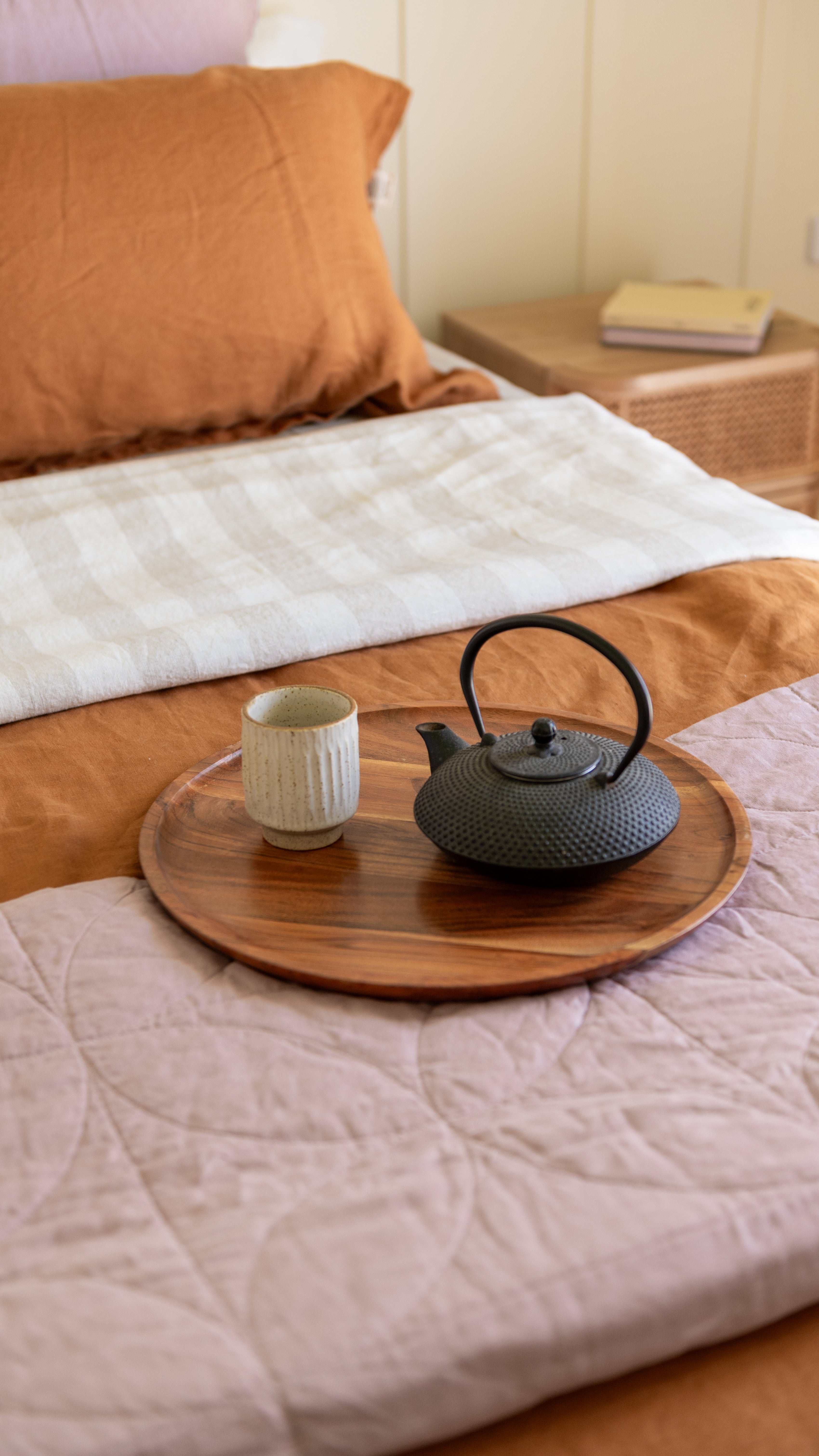
Clear surfaces change the feeling of a bedroom quickly. Keep only what supports the ritual of rest: a lamp, a book, a glass of water, perhaps a small tray or ceramic dish. Store the rest behind closed doors or in baskets that keep the room looking settled.
This is also where furniture scale matters. If the room is small, oversized pieces can make it feel compressed. If it is generous in size, too many small items can make it feel unsettled. A sleep sanctuary should feel balanced, with enough negative space for the eye to rest.
Style the room like you want to live in it
The best bedrooms are not showrooms. They are personal, tactile and easy to inhabit.
That might mean a linen robe hanging neatly behind the door, a soft throw folded at the end of the bed, or a bedside table in timber that brings warmth to the room. Materials such as flax linen, wood, ceramic, glass and brushed metal tend to sit well together because they feel honest and calm. They do not compete for attention.
Try to keep the palette cohesive across bedding, sleepwear and surrounding objects. When the room feels visually connected, it becomes easier to relax into it. This is where a lifestyle-led approach works well. Rather than treating bedding as a single purchase, consider the entire evening environment. The soft towel after a shower, the pyjamas you reach for, the bedside candle, the way the bed looks at 9 pm rather than only in daylight. Bedtonic approaches sleep this way, as a collection of quiet details rather than one grand gesture.
Let comfort lead, then refine
A sleep sanctuary should look beautiful, but beauty alone is not enough. If the room photographs well and sleeps poorly, it has missed the point.
Pay attention to what actually interrupts your rest. If you wake hot, start with bedding and airflow. If your mind feels overstimulated, work on lighting and clutter. If the room lacks comfort, focus on touch - washed linen, softer layers, a doona with better breathability, sleepwear that does not twist or cling.
You do not need to change everything at once. Often the most lasting improvements come one layer at a time, when each choice makes the room softer, quieter and easier to return to.
A well-made sleep sanctuary does not ask much of you. It simply receives you at the end of the day, with comfort that feels effortless and a kind of calm you can feel before you even turn out the light.


Leave a comment
This site is protected by hCaptcha and the hCaptcha Privacy Policy and Terms of Service apply.