



Is Linen Bedding Worth It?
You notice it first at the end of a long day - the feel of the bed before you even get in. If you’ve been wondering if linen bedding is worth it, the real answer starts there: not in a spec sheet, but in how it changes the way a room feels, the way you settle into sleep, and how well your bedding holds up over time.
Linen has a way of looking relaxed while still feeling elevated. It doesn’t chase a polished, hotel-flat finish. Instead, it brings softness, texture and a quieter kind of luxury to the bedroom. For many people, that alone is part of the appeal. But linen is also a practical fabric, and whether it is worth the investment depends on what you value most - immediate smoothness, long-term durability, breathability, or a more natural way of living.
Is linen bedding worth it for everyday sleep?
For many sleepers, yes. Linen earns its place because it performs well night after night, season after season. Pure flax linen is naturally breathable, which helps heat and moisture move away from the body rather than sitting heavily against the skin. In an Australian climate, where nights can shift from warm and sticky to crisp and cool, that matters.
Unlike synthetic blends that can feel clammy, or some heavier cottons that trap warmth, linen tends to regulate rather than overwhelm. It feels airy in summer and comfortably insulating in winter. That balance is one of its strongest qualities. You’re not buying bedding for a single season - you’re choosing something you’ll live with every day.
There is also the matter of softness. Good linen does not always feel silky straight out of the packet, which many people don't realise. It begins with a more textured hand feel than sateen or brushed cotton. But quality linen softens beautifully with use and washing, becoming more relaxed and more comfortable without losing its character. For people who love bedding that feels lived-in rather than overly finished, that progression is part of the value.
What makes linen different from cotton?
Cotton is familiar, easy, and available at every price point. Linen is more distinct. It is made from flax, a fibre known for strength, breathability and a naturally irregular texture that gives the fabric depth. That slight slub, the casual drape, the matte finish - all of it contributes to linen’s understated look.
In practical terms, linen often feels lighter and more open in weave than dense cotton percale, while carrying a more substantial, tactile presence than very smooth cotton sateen. It doesn’t cling to the body in the same way, and many sleepers find that it creates a cleaner, fresher sleep environment, particularly if they tend to run warm.
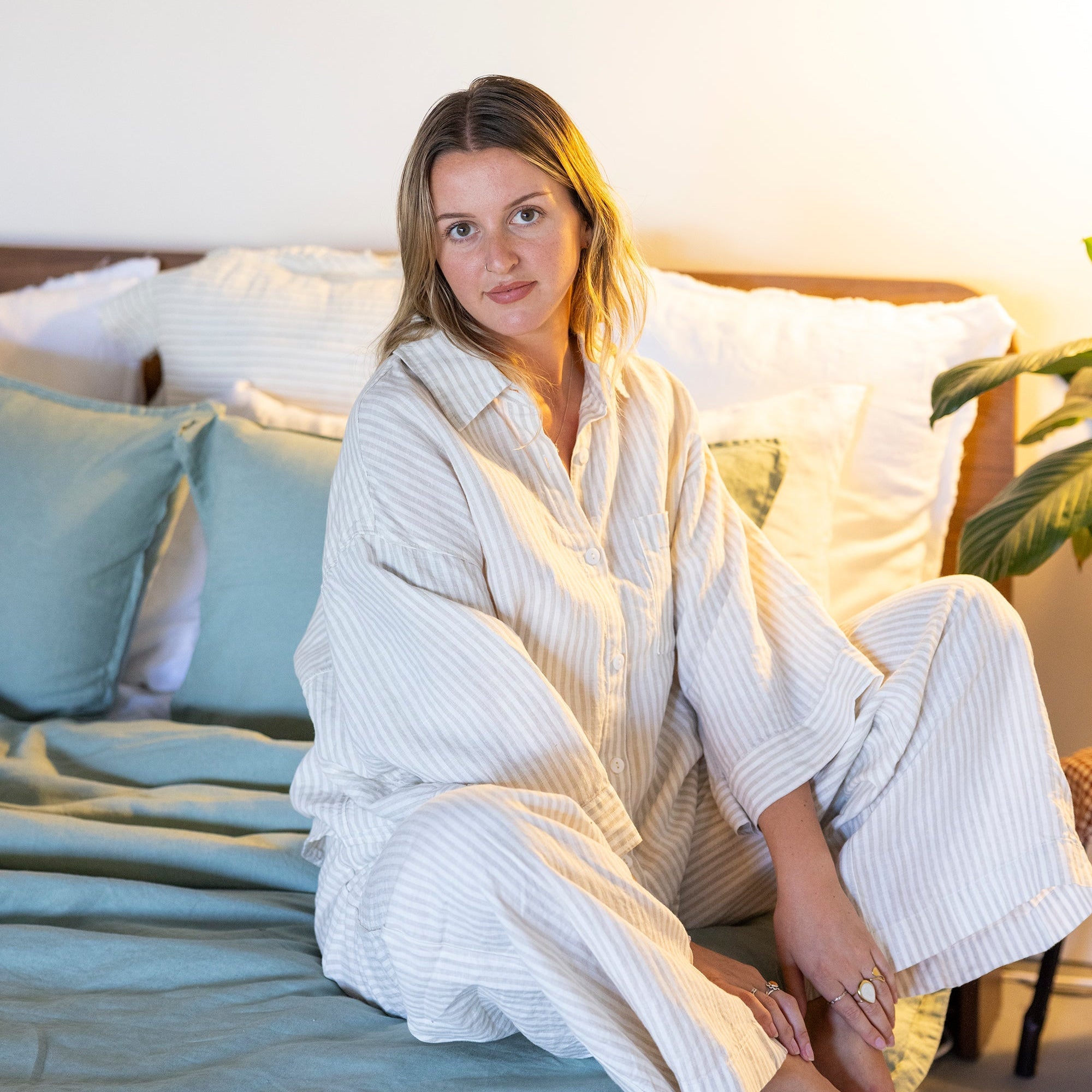
Visually, linen also changes the mood of a room. Cotton can look crisp and classic, but linen brings softness in a different sense. It creates ease. The bed looks styled without looking overworked. For design-conscious homes, that can be a meaningful advantage. Bedding is one of the largest visual elements in the bedroom, so fabric choice affects more than comfort.
Why linen bedding costs more
Part of the hesitation around linen comes down to price, fairly enough. Linen bedding usually costs more than cotton alternatives, sometimes significantly more. That higher price reflects the fibre, the production process and the overall quality standard expected of premium linen.
Flax is more labour-intensive to produce than standard cotton, and well-made linen relies on careful weaving, washing and finishing to achieve both durability and softness. Certified European flax linen, in particular, is often associated with stronger material standards and a more refined final product.
That does not mean every expensive linen set is automatically worth buying. Quality still matters. Poorly made linen can feel harsh, wear unevenly or lose shape quickly. But when the fabric is well sourced and properly finished, the value becomes easier to justify because it lasts.
Is linen bedding worth it if you want longevity?
This is where linen often makes the strongest case for itself. Flax fibres are naturally durable, which means linen bedding can handle regular use extremely well. Rather than thinning out quickly or becoming tired-looking after repeated washes, good linen tends to age with grace. It softens, relaxes and develops character.
That long life changes the value equation. A cheaper set that needs replacing sooner is not always the more economical choice. If you prefer buying fewer, better pieces for the home, linen is the way to go. It rewards consistency rather than constant turnover.
Of course, longevity depends on care. Linen is not difficult, but it does best with a little consideration - a gentle wash, mild detergent, and avoiding excessive heat where possible. Treated well, it can remain a staple for years rather than seasons.
The trade-offs worth knowing
Linen is not for everyone, and it helps to be honest about that. If you want a perfectly smooth, crisp bed with no natural creasing, linen may frustrate you. Wrinkling is part of its appeal, but it does wrinkle. The beauty is relaxed, not pristine.
There is also an adjustment period for some sleepers. If you are used to very silky bedding, linen can feel unfamiliar at first. Not rough, when it is good quality, but more textured and organic. Some people fall in love with that immediately. Others need a few weeks to appreciate it.
Price remains the clearest trade-off. Linen is an investment, and not every household wants to spend at that level on bedding. If budget is your main priority, there are excellent cotton options that may make more sense. Linen tends to be worth it most for those who care deeply about material quality, sleep comfort and the overall feel of the home.
Is linen bedding worth it in Australia?
In many Australian homes, linen makes particular sense. Our climate is rarely one-note. Even within a single week, conditions can swing from humid evenings to cool early mornings. Linen’s breathable, temperature-regulating nature suits that kind of living.
It also works beautifully with the Australian approach to interiors - lighter palettes, natural textures, open spaces, and a preference for homes that feel calm rather than over-styled. Linen sits comfortably in that world. It looks effortless in coastal spaces, pared-back city apartments, and heritage homes alike.
Because it breathes well and dries relatively quickly, linen can also feel more practical in warmer regions or for anyone who tends to overheat during the night. You are not constantly fighting the bed for comfort.
How to tell if linen bedding is actually good quality
If you are considering the investment, the details matter. Start with composition. 100% flax linen is the benchmark if you want the full benefit of the fabric. Blends can be pleasant, but they will not behave quite the same way in terms of texture, breathability or ageing.
Origin matters too. European flax is widely respected for a reason - consistency, fibre quality and stronger production standards all contribute to a better result. Certification can offer another layer of confidence, especially if material integrity is important to you.
Then there is finish. Quality linen should feel substantial but not stiff, textured but not scratchy, relaxed but not flimsy. The stitching, weight and overall construction should suggest longevity. We at bedtonic pride ourselves on being premium linen providers, building value not only through the fabric itself, but through considered finishing and a more cohesive linen lifestyle approach.
Who should buy linen bedding?
Linen is worth considering if you want bedding that feels elevated without being fussy, if you sleep warm, or if you prefer natural fibres over synthetic options. It suits people who think about the home in layers - comfort, appearance, longevity and material honesty all at once.
It may be especially worthwhile if you are furnishing your bedroom more intentionally and want pieces that hold their place over time. Linen does not rely on trends to feel current. It tends to outlast them.
If, however, your ideal bed is ultra-smooth, sharply pressed and available at the lowest possible price, linen may not be the best fit. Worth is personal. The right fabric is the one that matches how you live, sleep and want your home to feel.
For many people, linen bedding is worth it because it offers more than a softer bed. It brings ease, texture and a sense of permanence to everyday life - and that is often where the best home upgrades quietly prove their value.

Leave a comment
This site is protected by hCaptcha and the hCaptcha Privacy Policy and Terms of Service apply.