



How to Choose a Silk Doona for Better Sleep
A doona should make the bed feel considered before you even climb into it. Silk offers a particular kind of comfort: light in the hand, softly insulating and beautifully breathable against the shifts in temperature that can interrupt sleep. If you are considering how to choose a silk doona, look beyond its smooth, luxurious reputation and focus on the details that shape how it will feel night after night.
A well-chosen silk doona is an investment in quieter, more comfortable sleep. The right one should suit your bedroom climate, the way you sleep and the layers you love on your bed, without feeling overly heavy or restrictive.
Start with the silk inside
Not all silk-filled doonas are made alike. The quality and construction of the fill have the greatest influence on loft, temperature regulation and longevity.
Look for a doona filled with long-strand mulberry silk, rather than short silk fibres or a blended fill. Long strands can be layered into an even, airy web that holds its shape with less bunching over time. This creates a more consistent layer of warmth across the bed, with a soft drape rather than the puffed feel associated with some feather or synthetic inserts.
Pure silk fill is the clearest choice when the appeal of silk is what you are after. Check the product description carefully: a silk-covered doona is not necessarily silk-filled, and terms such as “silk blend” can refer to a relatively small proportion of silk mixed with other fibres. A 100% silk fill offers the material’s naturally breathable, moisture-managing character in its fullest form.
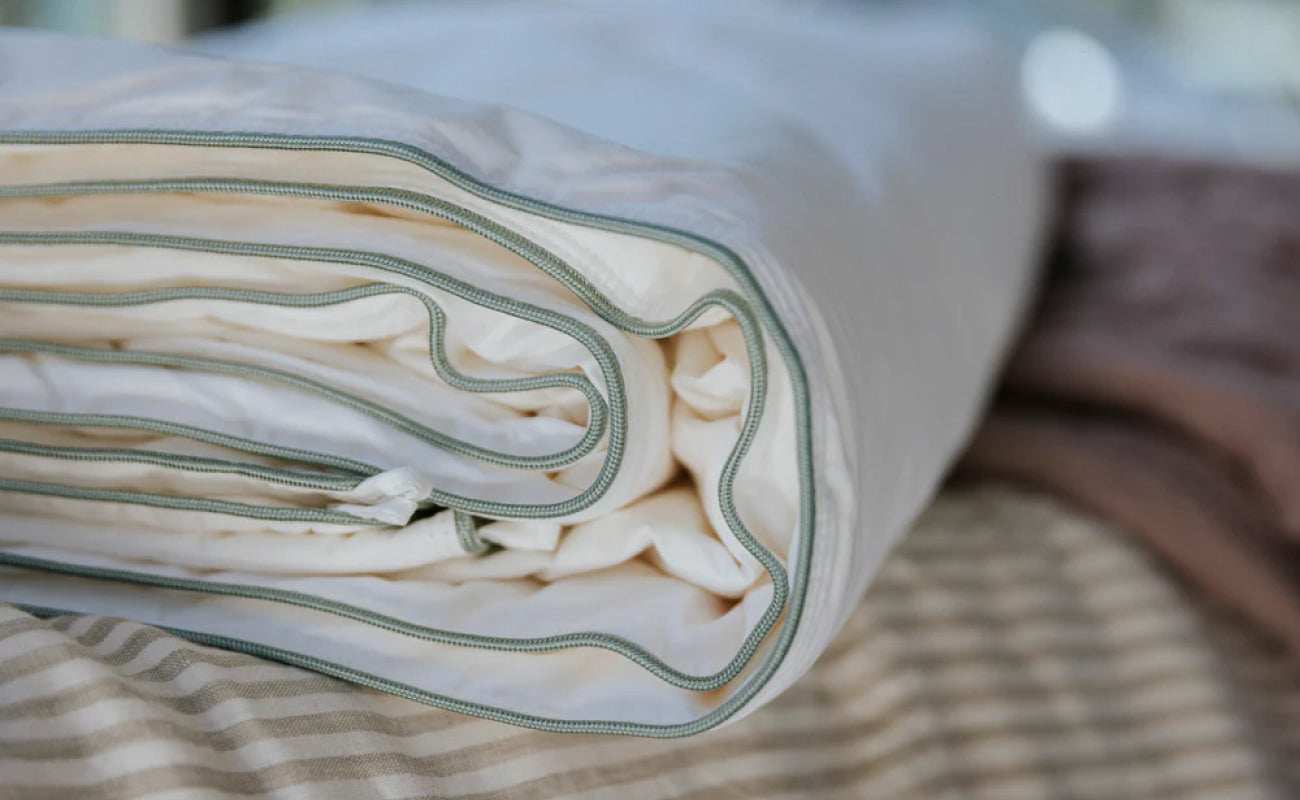
The outer casing matters too. A finely woven cotton shell is a practical, refined pairing for silk. It keeps the fill contained while allowing air to move through the doona. A tightly woven casing also helps create a smooth finish beneath a linen duvet cover, so the bed retains its relaxed, tailored shape.
Choose warmth for your room, not the season
Silk is valued for its ability to feel warm without becoming stifling. Its fibres help hold a comfortable pocket of air around the body while allowing excess heat and moisture to disperse. That makes silk especially appealing for sleepers who run warm, experience temperature changes overnight or prefer bedding with less bulk.
Still, no single fill weight suits every home. Consider the temperature of your bedroom rather than the weather outside. A well-insulated inner-city apartment, a breezy coastal house and a cool-weather home in the hills can call for very different levels of warmth.
Light or summer-weight silk doonas
A lighter silk doona is suited to warm rooms, summer sleeping and those who prefer minimal layers. It provides a gentle sense of coverage without the weight that can make a bed feel closed in. In much of Australia, a light silk insert can be useful for more months of the year than expected, particularly in homes with central heating or naturally warm bedrooms.
All-season silk doonas
For many Australian households, an all-season weight is the most versatile option. It gives enough insulation for cooler evenings while retaining the breathability silk is known for. If you sleep beside a partner with different temperature preferences, this balanced middle ground is often easier to live with than an especially warm doona.
Winter-weight silk doonas
Choose a warmer silk doona for unheated bedrooms, colder regions or anyone who genuinely feels the cold in bed. The trade-off is simple: more silk fill brings more insulation and a fuller profile. It can be ideal in winter, though it may feel excessive in a warm room or during a humid spell.
Fill weight is often expressed in grams or GSM, meaning grams per square metre. Higher numbers generally indicate more fill, but they are only useful when comparing doonas of similar size and construction. Treat them as a guide, not a guarantee of warmth. The most useful information is how the maker describes the intended climate and sleeping conditions.
Select the size with your bed styling in mind
A silk doona should fit its duvet cover neatly, but choosing the standard mattress size is not always the whole story. Think about the silhouette you want when the bed is made.
A doona in the same size as your mattress offers a tidy, classic finish. Sizing up can create more generous overhang and a softer, hotel-like look, especially on a deep mattress or ensemble base. It also gives two sleepers more individual coverage, which can make a meaningful difference if one person tends to draw the doona their way overnight.
Before sizing up, measure your duvet cover and check the insert dimensions. A doona that is too large for its cover may bunch at the edges and lose its even drape. For the most polished result, match the insert to the cover’s stated measurements rather than relying only on labels such as queen or king.
Consider your sleep preferences and sensitivities
The best doona is personal. If you dislike the weight of traditional bedding but still want to feel cosy, silk’s lightness is a strong advantage. It settles gently over the body, making it a thoughtful choice for sleepers who find dense fillings restrictive.
Silk may also appeal if you want a natural-fibre alternative to polyester-filled doonas. Its ability to manage moisture can help the sleep environment feel drier and more even, although it is not a substitute for keeping the room well ventilated or choosing breathable sheets.
For allergy concerns, avoid broad claims and look at the complete bedding system. Silk is often less inviting to dust mites than some other fills because it manages moisture well, but individual sensitivities vary. A removable, washable duvet cover is still essential, and anyone with severe allergies should follow advice from their health professional.
Your sheets and cover will influence the result as much as the insert itself. Linen is naturally breathable and becomes softer with use, making it an effortless companion to a silk doona. Together, these fibres create layers that feel relaxed in summer, comforting in winter and never overly formal.
Check how the fill is held in place
Silk does not need the same heavily stitched box construction used for lofty down alternatives. In fact, too much quilting can compress the fill and reduce its natural drape. Look for a considered construction that keeps the silk evenly distributed without creating hard channels or sparse corners.
A quality silk doona should feel consistent when lightly held up to the light. You should not see obvious clumps, empty patches or a heavy concentration of fill at one end. The edges should be neatly finished, and the casing should feel substantial enough to protect the silk while remaining soft and flexible.
It is worth remembering that silk has a lower, flatter loft than feather or synthetic fills. A silk doona may look less voluminous straight out of the packaging, yet still provide excellent warmth. Judge it by its evenness, drape and comfort rather than expecting a dramatically puffy appearance.
Be realistic about care
Silk rewards gentle care. Most silk doonas are not designed for frequent machine washing, so always follow the specific care label. Regular airing in a dry, shaded place helps refresh the fill, while a duvet cover protects the outer shell from everyday oils and marks.
Avoid vigorous shaking, harsh detergents and prolonged direct sun, which can weaken natural fibres over time. Spot clean small marks promptly where the care instructions allow, and seek professional cleaning when a full clean is needed. Store the doona completely dry in a breathable cotton bag or its original fabric storage bag, rather than sealed plastic, during the warmer months.
This care routine is part of the appeal of buying less, but choosing better. With a quality cover and considered handling, a silk doona can remain a beautiful part of your bedding for years.
A final way to choose a silk doona
Start with the conditions you sleep in, then choose pure long-strand silk, a fill weight that matches your room and a size that gives the bed the proportion you want. The finest choice will not be the thickest or the most elaborate. It will be the one that disappears into your nightly ritual, leaving the room calm, the bed inviting and sleep feeling naturally well held.



Leave a comment
This site is protected by hCaptcha and the hCaptcha Privacy Policy and Terms of Service apply.