



Flax Versus Cotton Pillowcases for Better Sleep
Your pillowcase is the layer that meets your skin and hair for hours each night. That makes the choice between flax versus cotton pillowcases more personal than it may first appear. Both are natural fibres with a rightful place in the bedroom, yet they create distinctly different sleep experiences: one crisp and airy, the other familiar and smooth.
For a bedroom built around quiet comfort and considered texture, the best fabric is rarely about a universal winner. It is about how you sleep, the climate you live in and the feeling you want to come home to.
Flax versus cotton pillowcases: the essential difference
Flax linen is made from the fibres of the flax plant. Cotton is spun from the soft fibres that surround the seeds of the cotton plant. Their origins shape their character: flax fibres are naturally longer, stronger and more textured, while cotton fibres are finer and can be woven into an exceptionally smooth surface.
A linen pillowcase has an easy, lived-in finish from the beginning. It may feel lightly textured at first, then becomes softer and more supple with washing and use. Cotton can feel softer straight out of the packet, particularly in a high-quality sateen or percale weave. It tends to offer a more uniform, polished surface.
Neither feel is inherently superior. Linen brings relaxed depth and a subtle sense of movement to the bed. Cotton offers clean familiarity and a neater look. The distinction is most apparent against your face at night and in the visual mood of the room each morning.
Breathability for Australian nights
Australia asks a lot of bedding. A cool winter evening can be followed by a warm, close night, and many homes hold heat long after sunset. This is where flax linen has a particular advantage.
Linen is highly breathable and known for its ability to absorb moisture without feeling damp. It allows air to move around the skin, which can make it an appealing choice for warm sleepers, humid climates and anyone who dislikes the clammy feeling of overheated bedding. Its natural temperature-regulating qualities also make it comfortable beyond summer. On cooler nights, linen does not feel as cold or slick as some tightly woven fabrics, especially once it has softened in.
Cotton is breathable too, although its performance varies greatly by weave and weight. Percale cotton has a crisp, cool hand feel that suits people who prefer a classic hotel-bed sensation. Cotton sateen is smoother and warmer, with a gentle sheen, making it well suited to cooler sleepers or those who enjoy a silkier finish.
If you wake warm or find yourself turning the pillow over for the cool side, flax linen is likely to feel more forgiving. If you run cold and want immediate softness with less texture, cotton may be the better companion.
Softness, skin and hair
Softness is subjective. Cotton often wins the first-touch test because its surface can be smooth from day one. A quality cotton pillowcase feels gentle against the face, and sateen in particular has a fluid, almost buttery character.
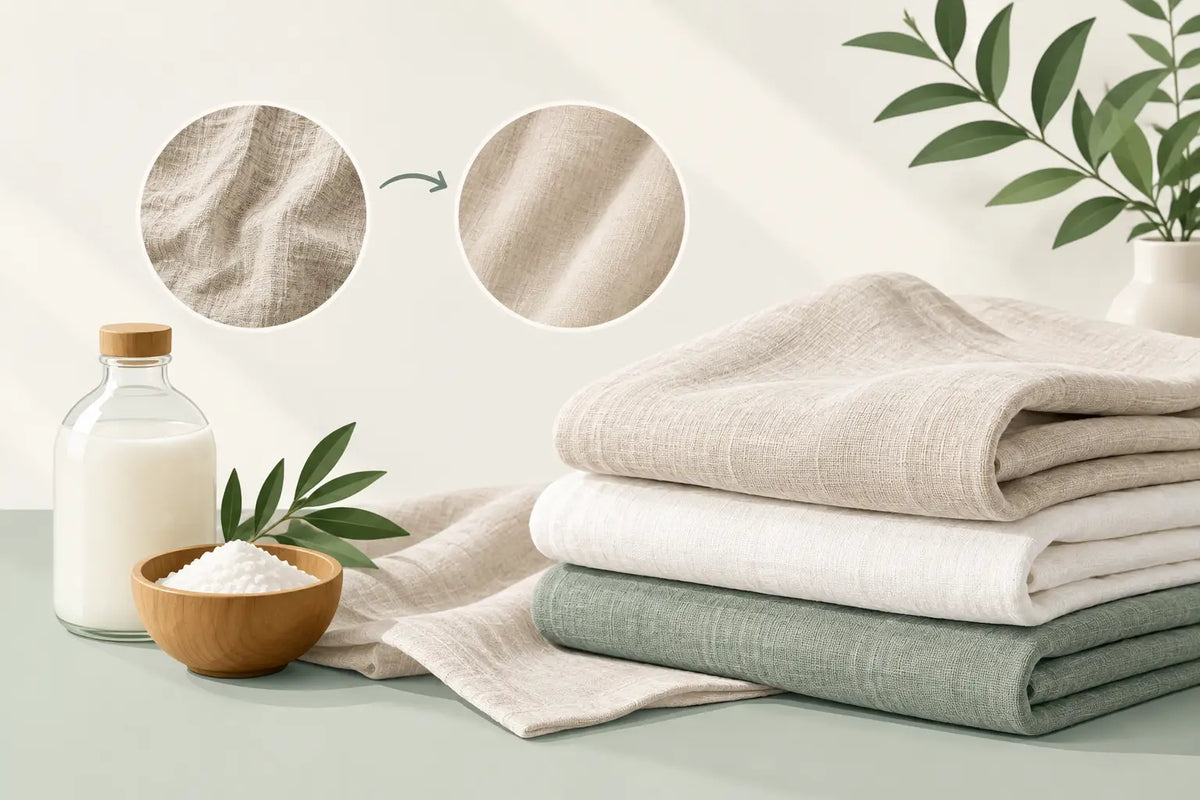
Flax linen approaches softness differently. It has a dry, airy hand feel rather than a slippery one. Early on, it may seem more textured than cotton, but it relaxes beautifully with every wash. The result is a softness with substance: relaxed, breathable and never overly precious.
For sensitive skin, the right choice depends on personal preference. Some people enjoy linen’s less clingy feel, particularly when they sleep warm. Others prefer the sleek surface of finely woven cotton. In either case, choose pure, well-made fabric and wash it before first use to remove any finishing residues and allow the fibres to settle.
Hair concerns can also influence the decision. Cotton’s absorbency may be less appealing for those trying to retain moisture in dry or textured hair. Linen is absorbent too, so neither is designed to deliver the low-friction properties associated with silk. Still, a softened linen pillowcase can feel less stifling for the scalp on warm nights, while cotton’s smoothness may suit those who prefer a more polished surface.
Durability and the beauty of everyday use
Pillowcases work hard. They are washed often, pulled into shape, slept on and folded away. Flax is naturally strong, and high-quality linen is designed to become more beautiful through regular use. Rather than wearing in a way that feels tired, it develops a softer, more relaxed character. Its occasional slub and gentle creasing are part of the fabric’s appeal, not flaws to be pressed away.
Cotton can also last for years when the fibre quality and weave are excellent. It is often easier to recognise its condition over time: a thin patch, a faded area or a loss of smoothness signals wear. Cotton may suit households that prefer bedding to retain a crisp, orderly appearance between washes.
Linen asks for a slight shift in expectation. It will crease. It may have natural variation in the weave. A linen pillowcase looks best when it is allowed to be itself: softly rumpled, tactile and effortless. If your idea of a perfectly made bed is sharply pressed and immaculate, cotton will likely feel more aligned. If you appreciate a bed with texture and ease, linen offers a lasting kind of luxury.
Care: simple, not fussy
Both fabrics benefit from gentle care, and neither needs an elaborate routine. Wash pillowcases separately or with similar colours in a mild liquid detergent. Avoid bleach, which can weaken natural fibres, and avoid overloading the machine so water can circulate properly.
Linen responds well to a cool or warm wash and a lower-heat tumble dry, or it can be line-dried in the shade. Remove it while slightly damp if you prefer a smoother finish. There is no need to iron linen unless you want a more tailored look; its natural creases are part of the texture.
Cotton generally tolerates washing well, though high heat can contribute to shrinkage and gradually dull the fibres. Percale may feel crisper after line drying, while sateen benefits from prompt removal from the dryer to minimise creasing.
For either fabric, having two or three sets in rotation gives each pair of pillowcases time to rest and extends their life. It also makes changing the mood of the bed wonderfully simple.
Style and the mood of the bedroom
Fabric is one of the quietest ways to shape a room. Cotton creates clarity. In white, soft grey or tailored stripes, it can make a bed feel fresh, classic and composed. It suits bedrooms with a more formal sensibility or spaces where clean lines lead the design.
Flax linen brings softness to the whole setting. Its matte finish absorbs light rather than reflecting it, and its natural texture gives even neutral colours depth. Oat, fog, warm white, olive and washed blue take on a gentle richness in linen. A pair of flax pillowcases can make a simple bed feel layered without appearing over-styled.
This is also where mixing fabrics works well. Linen pillowcases beside a cotton fitted sheet can create contrast in both feel and finish. A smooth cotton layer underneath and softened flax at the head of the bed offers the best of both worlds, particularly across changing seasons.
Which pillowcase is right for you?
Choose flax linen if you sleep warm, value breathable natural texture and like bedding that becomes softer with time. It is a particularly thoughtful investment for anyone drawn to an unforced, layered bedroom and a fabric that looks better when it is not perfectly pressed.
Choose cotton if you prefer a consistently smooth hand feel, a crisp tailored bed or the familiar comfort of a fabric that feels soft immediately. It remains an excellent everyday choice, especially when you select a quality weave suited to your temperature preferences.
The most satisfying bedding is not the one that follows a rule. It is the one you reach for after a long day, the one that feels right against your cheek, and the one that makes your bedroom feel quietly your own.


Leave a comment
This site is protected by hCaptcha and the hCaptcha Privacy Policy and Terms of Service apply.