



How to Store Linen Bedding for Lasting Softness
A well-made linen bed should feel as inviting when it comes out of the cupboard as it did on the first night. Knowing how to store linen bedding properly protects the relaxed texture, breathable feel and natural strength that make pure flax linen so easy to live with. It is less about complicated care and more about giving a beautiful natural fibre the right conditions between uses.
Start with completely clean, dry linen
Never put linen bedding away after a single warm night or while it still holds even a trace of moisture. Body oils, skin care residue and humidity can settle into the fibres over time, creating yellowing, mildew or a stale smell that is harder to remove later.
Wash sheets, duvet covers and pillowcases before long-term storage, following the care label. A gentle wash with a mild detergent is usually all linen needs. Avoid fabric softener, which can coat natural fibres and reduce the airy, lived-in softness that develops with every wash.
Dry the bedding completely before folding. Linen can feel dry on the surface while the heavier seams, hems and fitted-sheet elastic retain moisture, especially during a damp Australian winter. If you line-dry outdoors, bring it in once it is dry rather than leaving it in harsh afternoon sun. Too much direct sunlight can gradually fade deeper colours.
Give each piece a little time to cool and air after drying. Folding warm fabric straight into a closed cupboard can trap residual humidity, particularly in a compact apartment or an older home with limited ventilation.
Choose a cool, dry, dark place
The best place to store linen bedding is a clean cupboard or wardrobe shelf away from heat, steam and direct light. A linen press is ideal, though a dedicated shelf in a bedroom wardrobe works just as well. Linen appreciates stable conditions: dry air, gentle airflow and protection from dust.
Avoid keeping bedding in a bathroom cabinet, laundry, garage or storage area that becomes hot and humid. These spaces can encourage mustiness and may expose the fabric to splashes, cleaning-product fumes or temperature changes. The space beneath a bed can work for occasional storage, but only if it is dry, dust-free and kept in a breathable container.
Cedar drawers are often associated with linen storage, and they can be suitable when clean and well maintained. However, bare cedar may transfer its scent or oils to pale fabric. If you love the idea, line the drawer with unbleached cotton or acid-free tissue first.
Let linen breathe
Plastic tubs and vacuum-sealed bags are practical for moving house or protecting bedding during a short period of renovation. For months of storage, though, they are not the first choice. Linen is a natural fibre and benefits from airflow. Plastic can hold moisture in, leaving fabric flat, stale or vulnerable to mildew if it was not perfectly dry when packed.
Breathable cotton storage bags, fabric-lined boxes or a clean pillowcase are gentler alternatives. They keep dust away without sealing the bedding into an airtight environment. Choose undyed cotton where possible, particularly for white, oat or other light-toned linen, as coloured fabrics can occasionally transfer dye in humid conditions.
Fold linen bedding with room to rest
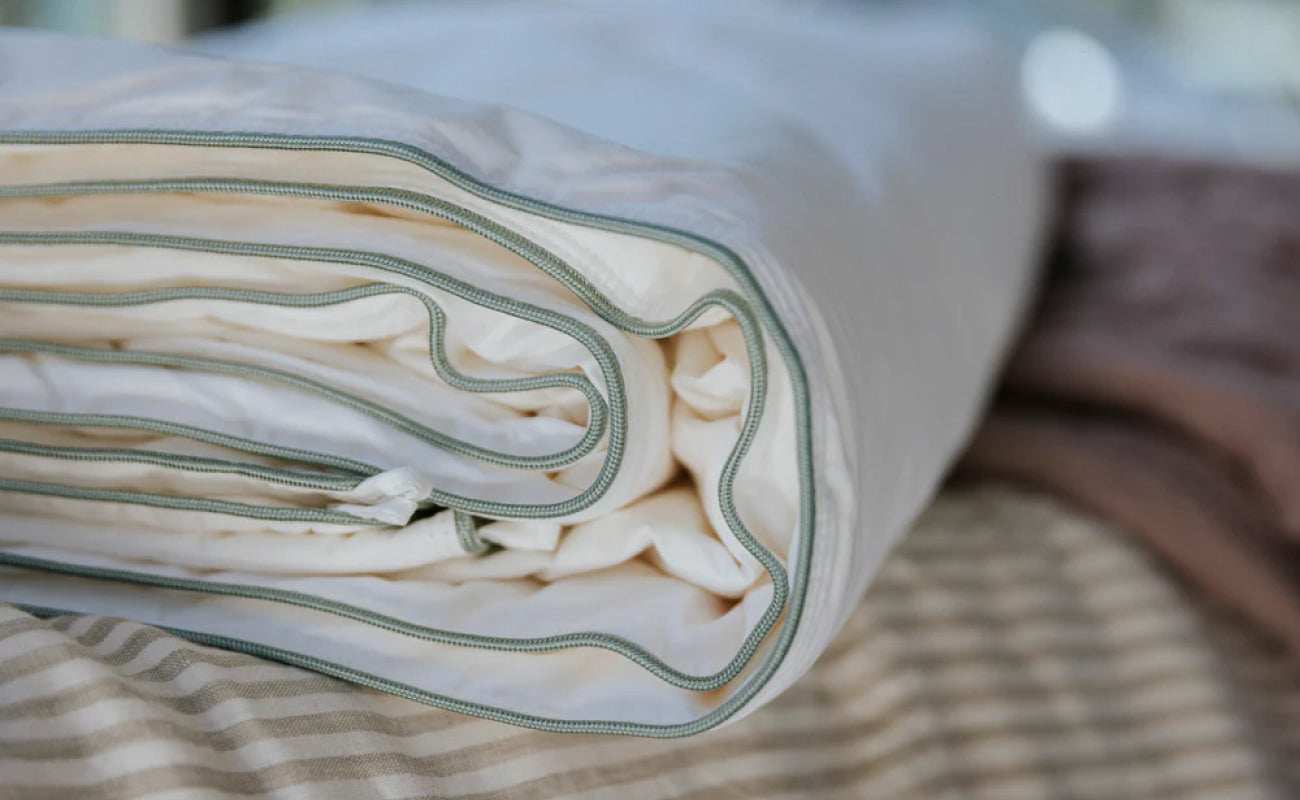
Linen does not need a perfect, crisp fold. In fact, part of its appeal is its naturally relaxed finish. Fold each item neatly enough to fit comfortably on the shelf, without pressing sharp creases into the same places every time.
For flat sheets and duvet covers, fold along their existing lines, then make broad, loose folds rather than compact squares. Turn fitted sheets inside out and tuck the elastic corners together before folding into a simple rectangle. It does not have to be flawless. A slightly softer fold is easier on the fabric and far more realistic on wash day.
If cupboard space is tight, store a complete set together by placing the folded fitted sheet and pillowcases inside the matching duvet cover or flat sheet. This keeps pieces easy to find and prevents a stack of spare pillowcases from becoming a cupboard mystery. It also makes changing the bed feel more considered: one bundle, one calm reset.
Avoid overfilling shelves. A tightly packed pile creates deep creases and makes it difficult for air to circulate. Leave enough space to lift one set out without tugging at the rest. For a refined linen cupboard, fewer well-kept sets will always feel more luxurious than an overcrowded shelf.
Use thoughtful layers of protection
For bedding you rotate regularly, a clean, dry shelf is often enough. For a guest-room set, a seasonal colourway or linen you will not use for several months, a little extra protection is worthwhile.
Place a sheet of acid-free tissue between dark and light pieces if they will be stored together. This is particularly useful for richly coloured linen, printed textiles or embroidered edges. Keep scented products nearby rather than directly on the fabric. A sachet of dried lavender in the cupboard can add a subtle sense of freshness, but avoid heavily perfumed drawer liners, mothballs and fragranced sprays. Their scent can linger in the fibres and overpower the quiet, natural character of linen.
If insects are a concern, begin with cleanliness rather than harsh treatments. Natural linen is not a preferred food source for clothes moths in the way wool can be, but pests are still drawn to residue left on used textiles. Regular washing, vacuuming the cupboard and checking corners are usually the most effective precautions.
Keep colours and weights in mind
Store light linen away from dark towels, denim or garments that may shed colour. Towels are also bulkier and can hold more moisture, so they are best kept on a separate shelf where possible.
Heavier blankets should sit at the base of a stack, with lighter sheets and pillowcases on top. This avoids crushing fine linen and makes each layer easier to reach. Do not hang duvet covers or sheets for extended periods unless cupboard shelving is unavailable. The weight of the fabric can pull at fold points, while hanging leaves it exposed to dust and light.
Refresh seasonal bedding before it disappears
At the change of season, take a few unhurried minutes before packing bedding away. Check that every piece is freshly washed and fully dry, then inspect for small marks that may have gone unnoticed. Treating a spot before storage is far easier than discovering it has settled in months later.
For Australian homes, this ritual is especially useful when summer humidity or winter damp makes cupboards feel different throughout the year. On a bright, dry day, open the linen cupboard for an hour and let the room air out. There is no need to wash linen simply because it has been stored, but a brief airing can restore its fresh feel before it returns to the bed.
Rotate the position of folded sets if one pile stays untouched for a long time. This prevents lasting creases and ensures each colour and weave gets its moment in the bedroom. Linen is made for use, not preservation behind closed doors. The more it is washed, slept in and enjoyed, the softer it becomes.
Bring it back to the bed with ease
When you are ready to use stored linen, give it a gentle shake and make the bed. Most fold lines will soften naturally with a night or two of sleep. If you prefer a smoother look, lightly mist the fabric with water and smooth it by hand, or use a warm iron while the linen is slightly damp.
Resist the urge to over-iron every crease. Linen’s texture is part of its beauty: tactile, breathable and quietly undone. A well-stored set should need very little attention before it becomes part of the room again.
A calm cupboard, clean folds and breathable storage are small rituals, but they extend the pleasure of every layer. Treat your linen bedding with this considered care, and it will keep bringing softness and ease to the everyday.



Leave a comment
This site is protected by hCaptcha and the hCaptcha Privacy Policy and Terms of Service apply.